How AI-Driven ERP Systems are Revolutionizing the Future of Nusaker?
The Death of Static Data in Nusaker
The era of the passive database is over. For years, the traditional business leader relied on his ERP to act as a digital filing cabinet—a place where data went to sit until he manually pulled a report. In the context of Nusaker, this reactive approach is no longer sustainable. The 2026 landscape demands a system that thinks, predicts, and acts before a human even realizes there is a bottleneck.
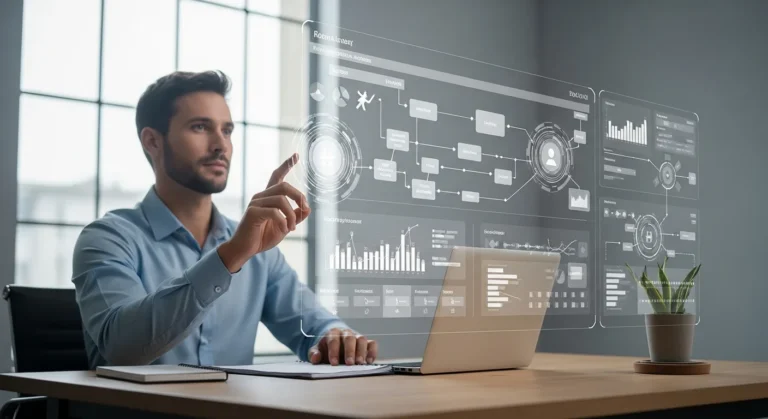
AI-driven ERP systems have moved beyond simple automation. They now serve as the central nervous system of an organization. When a manager integrates these tools, he isn’t just upgrading his software; he is installing an autonomous engine that optimizes his entire value chain in real-time.
Predictive Intelligence: Moving Beyond the Dashboard
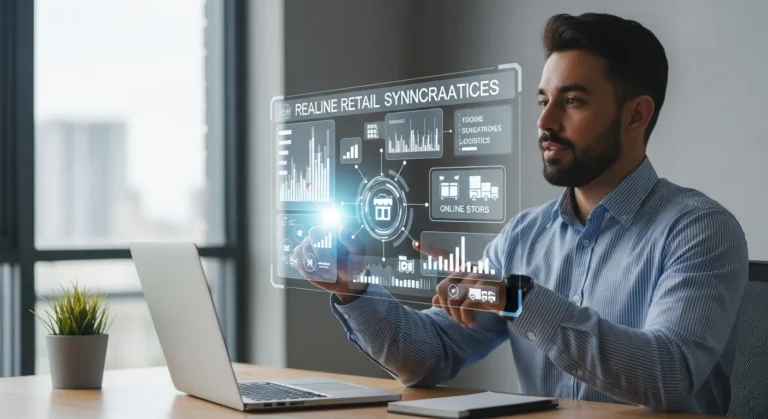
In the past, a CEO would look at his dashboard to see what happened last week. Today, an AI-driven ERP tells him what will happen next month. By leveraging machine learning algorithms, these systems analyze historical patterns within the Nusaker ecosystem to forecast demand with surgical precision.
- Autonomous Procurement: The system identifies a looming shortage and places orders with suppliers automatically, negotiating terms based on pre-set parameters.
- Dynamic Resource Allocation: It shifts human capital to high-priority projects based on real-time progress tracking.
- Risk Mitigation: It flags potential financial discrepancies or supply chain disruptions before they impact the bottom line.
To achieve this level of sophistication, a leader must focus on robust erp integration strategies that allow data to flow without friction between legacy modules and new AI layers.
The Role of the Modern ERP Specialist in 2026
As AI takes over the heavy lifting of data entry and basic analysis, the human element becomes more strategic. The modern professional is no longer a data clerk; he is a system architect. He spends his time refining the logic that governs the AI and ensuring that the machine’s outputs align with the long-term vision of the firm.
Understanding what an erp specialist does in this new environment is critical for any business owner. He must be able to bridge the gap between complex algorithmic outputs and actionable business decisions. He ensures that the AI remains a tool for growth rather than a black box of uninterpretable data.
Hyper-Personalization and User Experience
One of the most significant shifts in the future of Nusaker is the hyper-personalized user interface. AI-driven ERPs now recognize the specific needs of the individual user. When a warehouse manager logs in, he sees a completely different set of predictive insights than the CFO. The system learns his habits, anticipates his most frequent queries, and presents information in a way that minimizes cognitive load.
This level of customization ensures that every man in the organization can perform his duties with maximum efficiency. The software adapts to the human, rather than forcing the human to adapt to the rigid structures of the software.
Security and Ethical AI in Enterprise Systems
With great power comes the need for absolute security. In 2026, AI-driven ERPs are equipped with self-healing security protocols. If the system detects an anomalous login attempt or an unusual data export, it can isolate the threat and notify the administrator instantly. For the Nusaker framework, this means a significant reduction in the risk of corporate espionage or data leaks.
Furthermore, the ethical use of AI is now a core feature. The system provides explainable AI (XAI), meaning when it makes a recommendation—such as denying a credit line to a vendor—it provides the specific reasoning behind that decision. This transparency allows the executive to maintain full control and accountability over his operations.
Frequently Asked Questions
How does AI improve ERP accuracy in Nusaker?
AI reduces human error by automating data entry and using machine learning to cross-reference information across multiple departments, ensuring a single, accurate version of the truth.
Will AI-driven ERP systems replace human managers?
No. Instead, they empower the manager by removing administrative drudgery, allowing him to focus on high-level strategy and relationship building.
Is it difficult to migrate a Nusaker business to an AI ERP?
While the transition requires careful planning, modern cloud-based architectures make the migration smoother than ever, provided the leader has a clear roadmap for data cleansing and integration.
What is the cost-benefit ratio of these systems in 2026?
While the initial investment is higher than traditional software, the ROI is realized quickly through massive gains in operational efficiency and the prevention of costly supply chain errors.