
Why is Acumatica Cloud ERP the Preferred Choice for Mid-Market Growth in 2026?
The Shift Toward Cloud-Native Agility
Legacy ERP systems are the heavy anchors holding back modern enterprises. A business leader today knows the frustration of paying for a software license for an employee who only logs in once a month. Acumatica Cloud ERP has effectively dismantled this outdated model. By focusing on a cloud-born architecture, it provides a level of flexibility that older, ported-to-the-cloud systems simply cannot match.
He needs a system that moves as fast as his market. Acumatica is built on a modular framework, allowing a manager to toggle features on or off based on his specific operational requirements. This prevents the dreaded “software bloat” that often plagues enterprise resource planning. For a deeper look at how this platform stacks up against its peers, he might find our comprehensive Acumatica review particularly useful for his decision-making process.
The End of the “User Tax”: Consumption-Based Pricing
The most significant differentiator for Acumatica is its unique licensing model. Unlike competitors that charge per user, Acumatica uses a consumption-based pricing structure. This means the business owner pays for the computing resources he actually uses, rather than the number of people he employs.
- Unlimited Users: He can involve his entire supply chain, from warehouse staff to external vendors, without increasing his monthly bill.
- Scalability: As his transaction volume grows, the system scales with him. During seasonal lulls, he isn’t stuck paying for idle capacity.
- Data Democratization: Because there is no cost barrier to adding users, every department has access to real-time data, breaking down silos instantly.
Industry-Specific Editions for Precision Control
Acumatica does not believe in a one-size-fits-all approach. He can choose from several specialized editions designed to meet the unique compliance and workflow needs of his sector. The Construction Edition, for instance, handles payroll and project accounting with ease, while the Manufacturing Edition focuses on bill of materials (BOM) and shop floor control.
In the realm of production, the synergy between modern ERP and cloud computing allows for real-time tracking of raw materials and finished goods. This level of visibility ensures that he can maintain lean inventory levels without risking stockouts. The Retail and Distribution editions further extend this by offering native integration with major e-commerce platforms, ensuring his storefront and back-office are always in sync.
Future-Proofing with Open Architecture
The modern tech stack is a collection of specialized tools. Acumatica’s Open API allows him to connect his ERP to virtually any other software he uses, from specialized CRM tools to advanced AI analytics engines. This prevents vendor lock-in and ensures that his technology stack can evolve as new innovations emerge.
He can automate complex workflows using the built-in business logic engine. If he wants to trigger an automated alert when a high-value shipment is delayed, the system handles it without requiring custom code. This “low-code/no-code” environment empowers his IT team to deliver results faster, focusing on strategic growth rather than basic maintenance.
Mobile-First Design for the Modern Workforce
In 2026, work happens everywhere—not just at a desk. Acumatica was built with a mobile-first philosophy. Every screen and function is accessible via a standard web browser or a dedicated mobile app. This allows a field technician to update a service ticket or a sales executive to check inventory levels while he is on-site with a client.
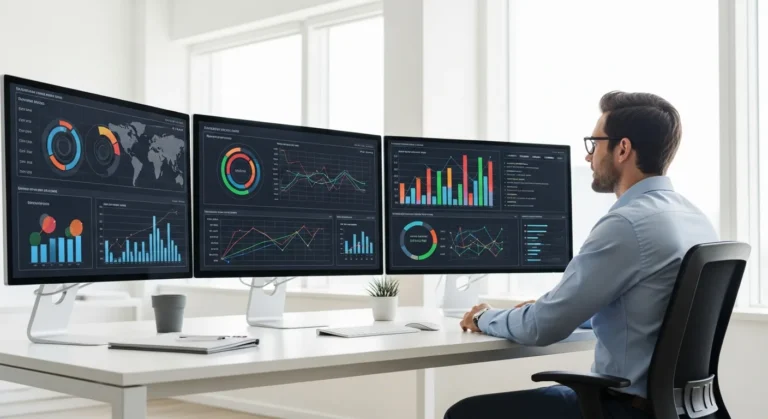
The interface is intuitive and responsive. He doesn’t need to spend weeks training his staff on a clunky, 1990s-style interface. The dashboard-driven UI provides a visual representation of Key Performance Indicators (KPIs), allowing him to spot trends and anomalies at a glance. This immediate access to intelligence is what separates market leaders from those who are merely reacting to events.
Frequently Asked Questions
Is Acumatica better than NetSuite for mid-sized businesses?
While both are powerful, Acumatica is often preferred for its consumption-based pricing and flexible deployment options. He can choose to host it on a public cloud or a private cloud, whereas NetSuite is strictly multi-tenant SaaS.
How long does a typical Acumatica implementation take?
Implementation timelines vary based on complexity, but most mid-market companies can expect a go-live period of 4 to 7 months. He should work closely with a certified partner to ensure data migration and user training are handled efficiently.
Can Acumatica handle international business requirements?
Yes, it supports multi-currency, multi-language, and multi-entity reporting. This allows him to manage global operations from a single instance of the software while maintaining local compliance.