Does Your Business Need ERP or Just Accounting Software?
Understanding the Core Differences Between ERP and Accounting Software
In the modern business landscape of 2026, the distinction between ERP and accounting software has become both more critical and more blurred. At its simplest, accounting software focuses specifically on the financial aspects of a business. It records transactions, manages accounts payable and receivable, and generates financial statements. It is the digital ledger of a company.
An Enterprise Resource Planning (ERP) system, however, is a much broader suite. While it contains a robust accounting module, it also integrates other vital business functions such as human resources, supply chain management, sales, and manufacturing. When a business leader evaluates his options, he must decide whether he needs a specialized tool for his books or a comprehensive engine to run his entire operation.
When a Standalone Accounting Solution is Sufficient
For many small business owners or solo entrepreneurs, a standalone accounting package is often the most efficient choice. If his primary goal is to stay compliant with tax laws and monitor his cash flow, he does not need the complexity of a full ERP. Modern accounting tools are now equipped with AI-driven automation that can categorize expenses and reconcile bank statements with minimal human intervention.
For a controller managing various subsidiaries or distinct legal entities, finding specialized accounting software for multiple businesses is the first step toward consolidated financial visibility without the overhead of a massive enterprise system.
The Strategic Advantages of Moving to an ERP
As a company grows, a manager often finds that his data is siloed. The sales team uses one tool, the warehouse uses another, and the finance team is stuck manually entering data from both. This is where the ERP shows its true value. By centralizing all data into a single source of truth, an ERP eliminates redundant data entry and provides real-time insights across the entire organization.
Key benefits of an integrated ERP include:
- Unified Data: Every department works from the same database, ensuring that when a salesman closes a deal, the inventory is updated and the invoice is generated automatically.
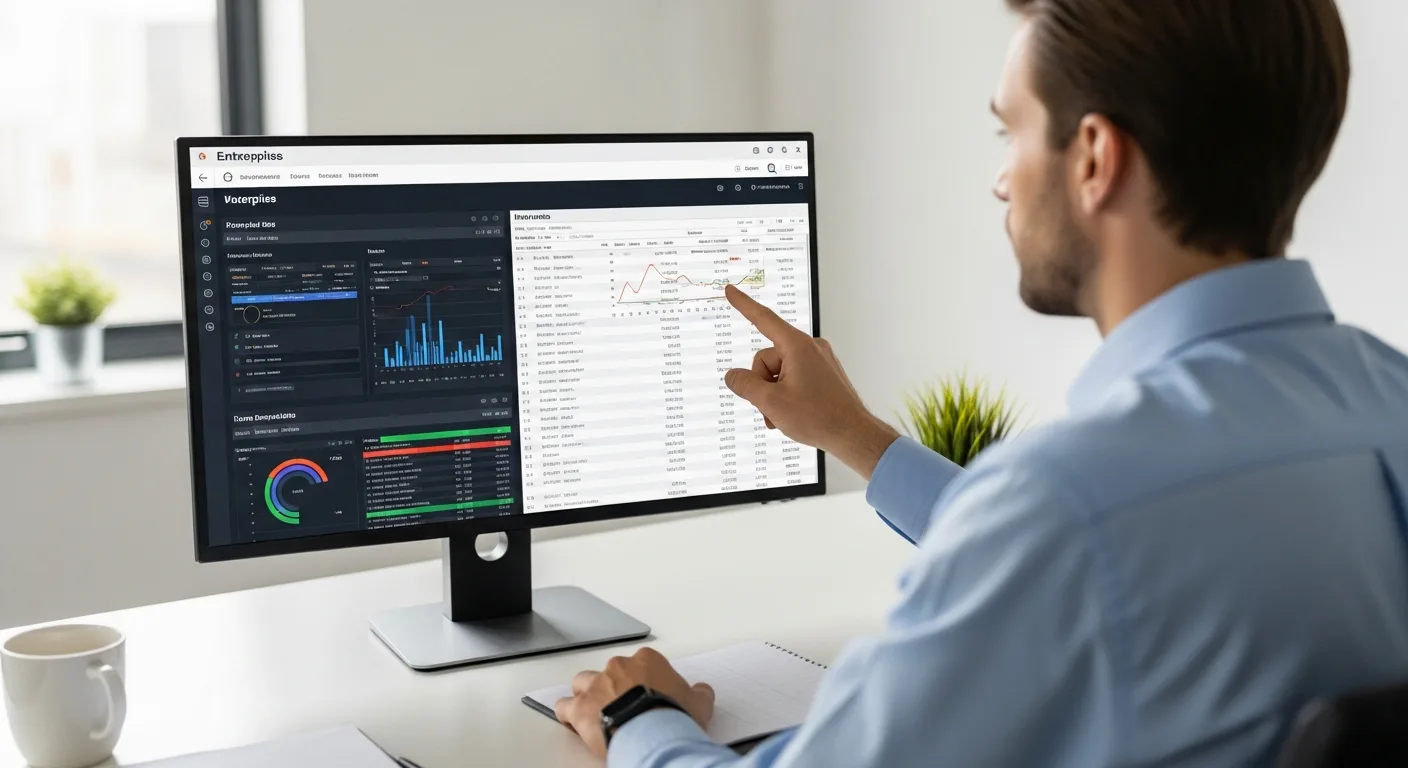
- Advanced Reporting: A CEO can look at a single dashboard to see his total operational health, from manufacturing lead times to net profit margins.
- Scalability: ERPs are designed to grow. When a business owner realizes his basic ledger isn’t enough, he might look into an ERP system for small business to centralize his operations and prepare for future expansion.
Key Features to Prioritize in 2026
Whether choosing a dedicated accounting tool or a full ERP, certain features are non-negotiable in the current year. Automation is at the top of the list. A financial officer should expect his software to handle routine tasks like invoice processing and payroll calculations autonomously. Furthermore, Cloud Integration is essential for real-time access from any device, allowing a manager to approve a large purchase order while he is traveling.
Security is another paramount concern. With the rise of sophisticated cyber threats, ensuring the software has multi-factor authentication and end-to-end encryption is vital for protecting a company’s sensitive financial data.
Frequently Asked Questions
Is ERP more expensive than accounting software?
Generally, yes. An ERP requires a higher initial investment and often involves more complex implementation and training costs. However, for a growing business, the long-term efficiency gains often outweigh the initial price tag.
Can I migrate my data from accounting software to an ERP later?
Yes, most modern ERP providers offer data migration tools. A business leader can start with a robust accounting tool and transition his data into a full ERP suite as his operational needs become more complex.
Does an ERP replace the need for an accountant?
No. While it automates many tasks, an accountant is still needed to provide strategic financial advice, ensure tax compliance, and interpret the high-level data that the ERP provides to the business owner.