Why Kanban Board Software is the Backbone of Modern Agile Workflows
The Visual Revolution: Why Teams are Moving to Kanban Boards
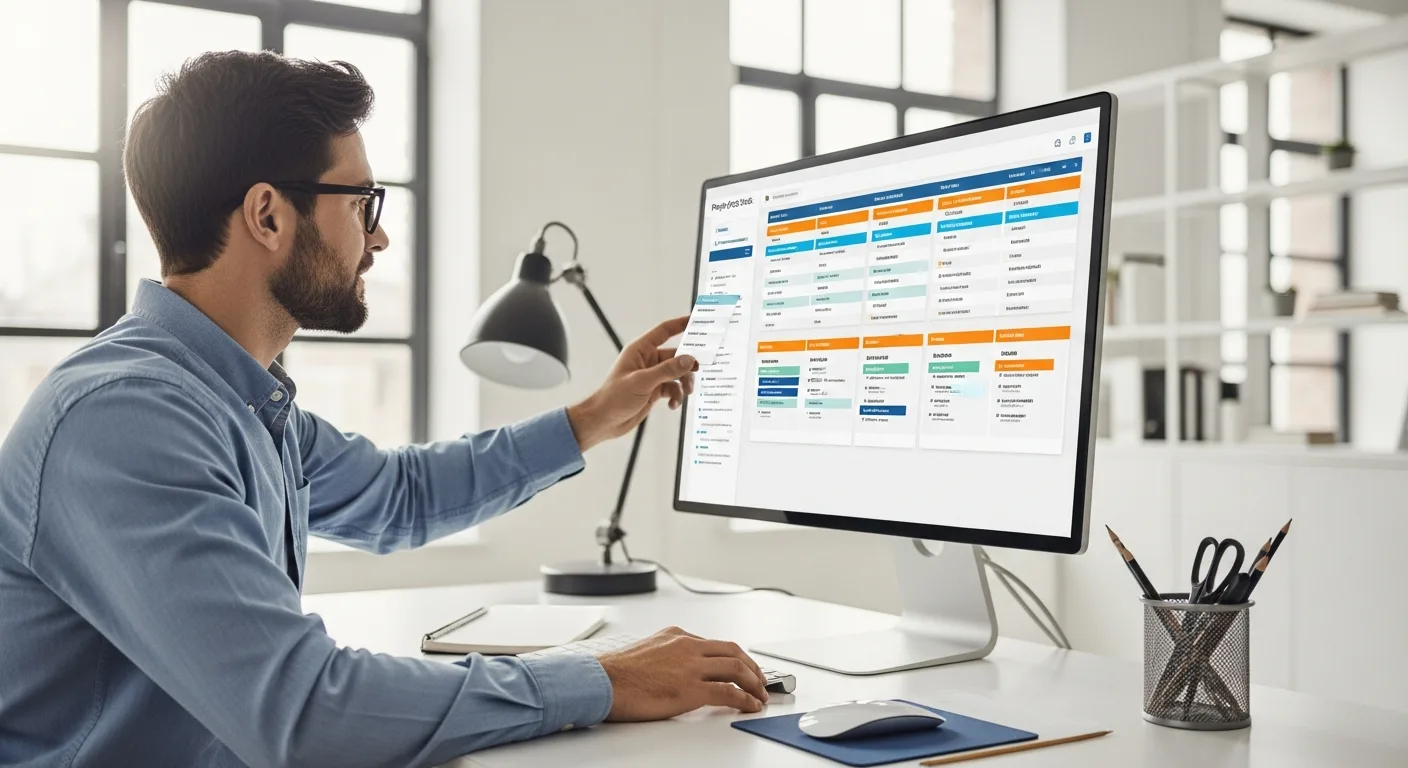
In the fast-paced digital landscape of 2026, the demand for transparency and speed has never been higher. Kanban board software has transitioned from a niche tool used by software developers to a universal standard for any professional who values efficiency. At its core, this software digitizes the traditional Japanese manufacturing method, allowing a manager to see exactly where every task stands in real-time. By visualizing work, he can identify hidden delays before they become systemic failures.
The primary appeal lies in its simplicity. Unlike complex Gantt charts that can feel rigid, a kanban board offers a fluid environment. Each card represents a task, and each column represents a stage in the process. As a team member completes his portion of the work, he moves the card to the next column, providing an immediate status update to his entire department without the need for a single email.
Core Components of High-Performance Kanban Systems
To truly master workflow optimization, one must understand the mechanics that make kanban board software effective. It is not just about moving cards; it is about managing flow and limiting work-in-progress (WIP). When a lead designer sets a WIP limit, he ensures that his team is not overwhelmed by too many active tasks, which prevents the cognitive load that often leads to burnout and errors.
- Visual Signals: Cards that contain all necessary data—descriptions, attachments, and due dates.
- Columns: Representing the workflow stages, typically from ‘To-Do’ to ‘Done’.
- Work-in-Progress Limits: Constraints that prevent a user from taking on more than he can realistically handle.
- Commitment Points: The moment a task is picked up from the backlog and work officially begins.
When exploring options, many small teams begin by evaluating free task management software reviews to find a starting point that aligns with their specific project needs. This initial step allows a business owner to test the waters before committing to a premium enterprise solution.
Strategic Benefits for Modern Leadership
For a project lead, kanban board software serves as a strategic dashboard. It allows him to track cycle time—the duration it takes for a card to move from start to finish—and lead time. These metrics are vital for forecasting and resource allocation. In 2026, AI-driven kanban tools can even predict potential bottlenecks by analyzing historical data, suggesting when a manager should reassign tasks to a colleague who has more capacity.
This transition is part of a broader trend where digital workplace software transforms productivity by centralizing communication and task execution. Instead of toggling between five different apps, a professional can find everything he needs within the context of the task card itself.
Choosing the Right Kanban Software in 2026
The market is flooded with options, ranging from lightweight apps to heavy-duty enterprise platforms. When a CTO evaluates a new tool, he must consider integration capabilities. A kanban board should not exist in a vacuum; it needs to sync with version control systems, CRM platforms, and communication hubs. Security is also paramount, as these boards often contain sensitive intellectual property and strategic roadmaps.
Furthermore, flexibility is key. A modern system should allow a user to customize his board layout, add custom fields, and automate repetitive actions. For example, when a card moves to the ‘Quality Assurance’ column, the software can automatically notify the lead tester so he can begin his review immediately.
Frequently Asked Questions
What is the main difference between Kanban and Scrum?
While both are agile frameworks, Scrum relies on fixed-length iterations called sprints, whereas Kanban is a continuous flow model. A manager using Kanban focuses on reducing the time it takes for a single task to move through the system, rather than completing a set batch of work within a two-week window.
Can Kanban board software be used for non-technical teams?
Absolutely. Kanban is highly effective for marketing, HR, and legal departments. Any professional who manages a process with distinct stages will find that visualizing his workflow helps him stay organized and reduces the stress of tracking multiple moving parts.
How do WIP limits improve productivity?
WIP limits force a team to finish what they started before taking on new work. This reduces the ‘context switching’ penalty that occurs when a worker jumps between too many tasks, ultimately increasing his throughput and the quality of his output.
Is mobile access important for Kanban tools?
Yes, in 2026, mobile responsiveness is essential. It allows a field technician or a traveling executive to update his progress or check the status of a project while he is on the move, ensuring the board remains a ‘single source of truth’ at all times.