Why is Manufacturing ERP Software the Secret to Scaling Production in 2026?
The End of Guesswork on the Factory Floor
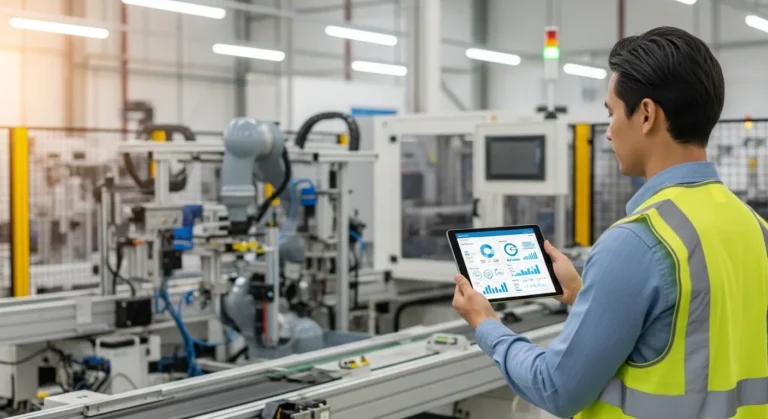
A production manager who relies on spreadsheets is a man living on borrowed time. In the high-stakes environment of 2026, the margin for error has vanished. Manufacturing ERP software acts as the central nervous system of a plant, pulling data from every lathe, sensor, and shipping dock into a single, readable dashboard. He no longer has to wonder if a shipment will be late; he sees the bottleneck forming in real-time and adjusts his schedule before the client even notices a delay.
This software doesn’t just track parts; it synchronizes the entire lifecycle of a product. From the moment a sales order is entered to the second the finished good leaves the loading dock, the system ensures that every man on the floor knows exactly what his task is and which materials he needs to complete it.
Real-Time Visibility and Data-Driven Leadership
The primary advantage of a modern ERP is the elimination of information silos. When a leader implements modern connectivity frameworks, he ensures that data flows seamlessly between the warehouse and the executive suite. This transparency allows him to make aggressive decisions based on hard facts rather than gut feelings.
- Live Production Tracking: Monitor machine uptime and operator efficiency instantly.
- Automated Bill of Materials (BoM): Reduce manual entry errors that lead to costly production halts.
- Predictive Maintenance: The system alerts a technician before a machine fails, saving him from expensive emergency repairs.
Precision Inventory and Supply Chain Control
Excess inventory is a silent profit killer. It ties up capital and occupies valuable floor space. By optimizing his stock levels through specialized manufacturing inventory software, a manufacturer prevents capital from sitting idle in a dusty corner of the warehouse. The ERP calculates exactly when to reorder raw materials based on current lead times and production velocity.
He can set automated triggers that alert his procurement team the moment a specific alloy or component hits a minimum threshold. This just-in-time approach keeps the balance sheet lean and the production lines moving without interruption.
Streamlining the Shop Floor Workflow
Efficiency is born from order. A manufacturing ERP organizes the shop floor by generating digital work orders that follow the product through every stage of assembly. The operator at his station can log in, see his queue, and report progress with a single click. This data feeds back into the system, giving the plant manager a bird’s-eye view of the entire operation.
Quality control also becomes a standardized process rather than an afterthought. The software can mandate inspection steps at specific intervals, ensuring that no defective unit moves forward. If a part fails, the system logs the reason, allowing the engineer to identify patterns and fix the root cause in his process.
Choosing Between Cloud and On-Premise Solutions
A business owner must decide where his data lives. Cloud-based ERPs offer the benefit of remote access, allowing him to check production stats from his tablet while traveling. These systems typically require less upfront capital and handle updates automatically. On the other hand, an on-premise solution gives him total control over his hardware and data security, which is often preferred by those handling sensitive government or defense contracts.
Regardless of the deployment method, the goal remains the same: total operational control. He must choose a platform that scales with his ambition, ensuring that the software he buys today won’t be a bottleneck for his growth tomorrow.
Frequently Asked Questions
What is the main difference between general ERP and manufacturing ERP?
General ERP focuses on accounting and HR, while manufacturing ERP includes specialized modules for shop floor control, Bill of Materials (BoM), and production scheduling.
How does ERP software improve manufacturing ROI?
It reduces waste, lowers labor costs through automation, and prevents downtime, directly increasing the manufacturer’s bottom line.
Can a small manufacturer afford an ERP system?
Yes, many modern providers offer tiered pricing and cloud-based models specifically designed for smaller shops to help them compete with larger rivals.