
Is ERP Software for Small Business Worth the Investment in 2026?
Why Small Businesses are Moving Beyond Spreadsheets in 2026
For years, the average small business owner managed his operations through a chaotic mix of spreadsheets, sticky notes, and sheer willpower. However, as we move through 2026, that manual approach is no longer sustainable. The speed of the market demands real-time data. When a founder realizes he can no longer track his inventory levels while simultaneously managing payroll and customer queries, he knows it is time for a change.
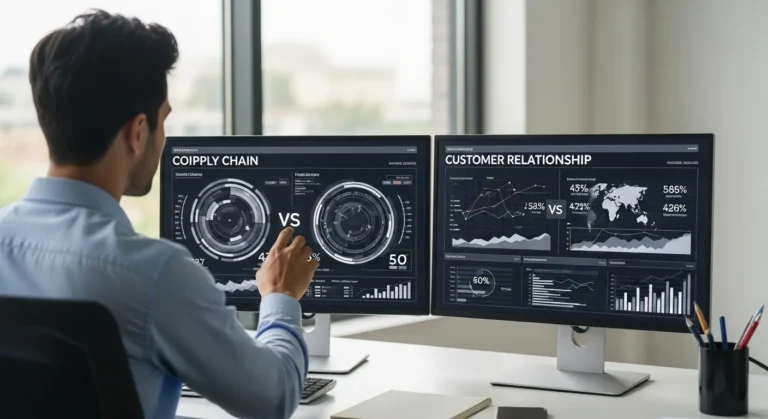
ERP software for small business has evolved from a luxury for giants into a survival tool for the lean enterprise. It acts as the central nervous system of a company, connecting disparate departments into a single, cohesive unit. Instead of hunting through three different apps to find a shipping update, a manager can see the entire lifecycle of an order in one dashboard.
Core Modules That Drive Small Business Growth
Modern ERP systems are modular, meaning a business owner doesn’t have to pay for features he won’t use. He can start with the essentials and scale as his revenue climbs. Here are the non-negotiable components for 2026:
- Financial Management: Automates invoicing, tax compliance, and real-time cash flow tracking.
- Inventory & Supply Chain: Prevents stockouts by using predictive analytics to suggest reorder points.
- Customer Relationship Management (CRM): Keeps a detailed history of every client interaction to improve retention.
- Human Resources: Simplifies shift scheduling and performance tracking for a growing team.
When a founder decides to upgrade his operations, he often looks for a robust erp system for small business that can scale as his team grows. This scalability ensures that the software he buys today won’t be obsolete by next year.
The Cloud Revolution: Accessibility for the Lean Team
In 2026, on-premise servers are becoming relics. Cloud-based ERPs have leveled the playing field, allowing a small business owner to access enterprise-grade tools for a monthly subscription fee. This shift eliminates the need for an expensive in-house IT team to maintain hardware.
The cloud also enables a mobile-first workflow. A field technician can update a job status on his tablet, which immediately triggers an invoice in the accounting module. This level of synchronization reduces the “lag time” that often kills small business profitability. It is also vital to understand the erp and accounting software comparison to ensure he isn’t just buying a glorified ledger, but a comprehensive management tool.
Avoiding the Implementation Trap
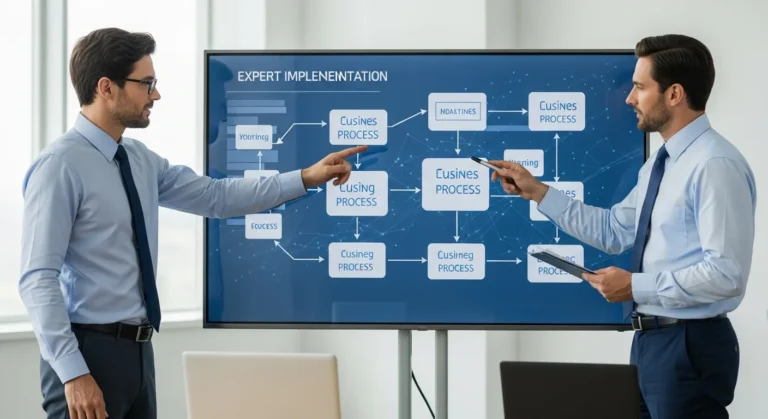
The biggest risk a business owner faces isn’t the software itself, but the implementation process. Many projects stall because the leader tries to change everything at once. To succeed, he should focus on data cleanliness before migrating. Moving messy, outdated data into a shiny new ERP only results in faster, automated messiness.
He must also prioritize training. An ERP is only as effective as the person clicking the buttons. If his staff doesn’t understand the “why” behind the new system, they will revert to their old, inefficient habits. A phased rollout—starting with the most painful department first—is usually the smartest path to a high return on investment.
How to Choose the Right System for Your Workflow
Don’t get distracted by flashy features that don’t solve your specific problems. A business owner should start by mapping his current processes. He needs to identify where the bottlenecks are. Is it in the warehouse? Is it in the billing cycle? Once he knows his pain points, he can evaluate vendors based on their ability to solve those specific issues.
Look for integration capabilities. In 2026, your ERP must play nice with your existing tools, whether that is a specific shipping carrier’s API or a specialized marketing platform. If the software locks his data in a silo, it defeats the entire purpose of an integrated system.
Frequently Asked Questions
Is ERP software too expensive for a company with under 20 employees?
No. Many modern vendors offer tiered pricing based on user count or transaction volume. In 2026, there are many “starter” ERP packages designed specifically for micro-businesses that provide the core benefits without the enterprise price tag.
How long does it take to see a return on investment?
Most small businesses begin to see tangible time savings within the first three to six months. Financial ROI typically follows within the first year as the business reduces waste, avoids overstocking, and speeds up its billing cycles.
Can I use an ERP if I already have accounting software?
Yes. Many businesses start with accounting software and then migrate to a full ERP when they need more operational depth. Some ERPs even allow you to keep your current accounting tool and sync it via an API, though a fully integrated system is usually more efficient.