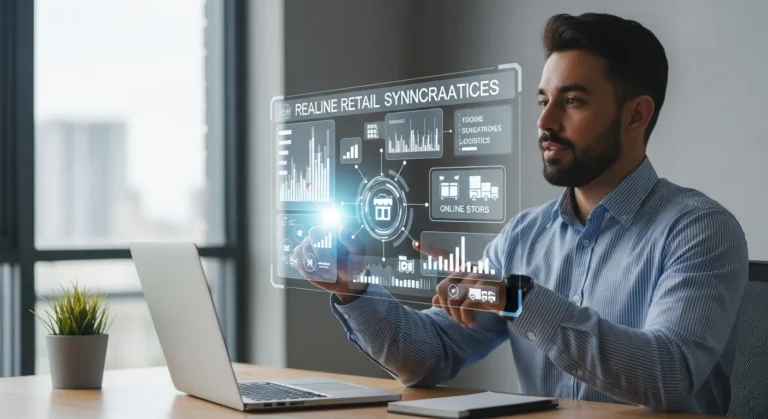

Why Food and Beverage ERP is the Secret to Scaling Your Production in 2026
The High Stakes of Food and Beverage Management
Imagine a production manager standing on the warehouse floor, realizing a batch of raw ingredients has been flagged for contamination. Without the right tools, he faces a nightmare of manual logs, frantic phone calls, and the looming threat of a full-scale recall. In the high-velocity world of 2026, relying on spreadsheets is no longer a risk—it is a liability. A specialized food and beverage ERP (Enterprise Resource Planning) system is the only way he can maintain control over razor-thin margins and complex global supply chains.
Generic software often falls short because it doesn’t understand the nuances of perishability or recipe variability. A dedicated system ensures that every gram of product is accounted for, from the moment it enters the facility until it reaches the consumer’s plate.
Why Generic ERPs Fail the Food Industry
Many business owners make the mistake of choosing a one-size-fits-all solution. While a standard ERP might handle basic accounting, it often lacks the granular control required for food safety. A food-specific system addresses unique industry pain points that a generalist developer might overlook:
- Catch Weight Management: Handling products that vary in weight, such as meat or cheese, requires specialized logic to ensure accurate billing and inventory.
- Recipe and Formula Scaling: When a manufacturer needs to double his output, the software must automatically adjust ingredient ratios while accounting for physical constraints.
- Shelf-Life Tracking: The system must prioritize First-Expired, First-Out (FEFO) logic to minimize waste and maximize freshness.
By addressing these specific food manufacturing software challenges, a business leader can protect his brand reputation and ensure his operations remain profitable even as ingredient costs fluctuate.
Real-Time Traceability and Compliance
In 2026, regulatory bodies have become more stringent than ever. A food and beverage ERP provides a digital paper trail that is essential during audits. If a safety issue arises, the system allows a quality control officer to perform a bi-directional trace in minutes. He can see exactly which suppliers provided the raw materials and which customers received the finished goods.
This level of transparency is not just about avoiding fines; it is about building trust. When a distributor knows that a manufacturer has total visibility into his processes, he is more likely to sign long-term contracts. The integration of IoT sensors directly into the ERP allows for real-time temperature monitoring, ensuring that the cold chain is never broken during transit.
Boosting Operational Efficiency Through Integration
Efficiency is the byproduct of a unified data environment. When a production planner looks at his dashboard, he needs to see more than just inventory levels. He needs to see labor availability, machine uptime, and upcoming maintenance schedules. A robust ERP acts as the central nervous system of the company.
To achieve this, many organizations are focusing on ERP integrations for operational efficiency. By connecting the ERP with Warehouse Management Systems (WMS) and Point of Sale (POS) hardware, a business owner can eliminate data silos. This ensures that when a sales order is placed, the production floor is notified instantly, and the procurement officer knows exactly when he needs to reorder supplies.
Optimizing the Supply Chain for Perishables
The volatility of the global market requires a proactive approach to supply chain management. A modern food and beverage ERP uses predictive analytics to help a manager forecast demand with high precision. He can analyze historical trends and seasonal shifts to ensure he isn’t overstocking items that will spoil or understocking during a peak period.
Furthermore, these systems facilitate better communication with vendors. By providing a portal where suppliers can update their delivery timelines, the ERP allows the manufacturer to adjust his production schedule on the fly. This agility is what separates market leaders from those who struggle to keep up with changing consumer tastes.
Choosing the Right Solution for Your Business
Selecting an ERP is a long-term commitment. A decision-maker must evaluate whether the vendor understands the specific regulations of his region and the technical requirements of his product line. He should look for a partner who offers cloud-based deployment, which provides the flexibility to scale as the business grows without the need for massive on-site server investments.
The implementation process should be handled by experts who can map the software to existing workflows while identifying areas for improvement. When the system is properly configured, it becomes more than just a database; it becomes a strategic asset that empowers every employee to perform his job with greater accuracy and speed.
Frequently Asked Questions
What is the main difference between a standard ERP and a food and beverage ERP?
A food and beverage ERP includes specialized features like recipe management, catch weight processing, and FEFO inventory logic, which are typically absent in general-purpose software.
How does an ERP help with food safety compliance?
It automates the tracking of lot numbers and expiration dates, providing instant traceability reports that are required for FSMA and HACCP compliance audits.
Can a small food producer benefit from an ERP?
Yes. Modern cloud-based ERPs are scalable and affordable, allowing a small producer to professionalize his operations and compete with larger manufacturers by reducing waste and improving order accuracy.
Does a food and beverage ERP handle nutritional labeling?
Many advanced systems can automatically calculate nutritional values and allergen information based on the ingredients used in a recipe, simplifying the labeling process for the manufacturer.