Why is ERP Manufacturing Essential for Scaling Your Production in 2026?
The Shift from Chaos to Precision in Manufacturing
Manufacturing is no longer just about the physical act of assembly. It is a high-stakes game of data management, where a single delay in the supply chain can derail an entire quarter’s revenue. For the modern plant manager, ERP manufacturing systems have evolved from optional luxuries into the central nervous system of the factory floor. He needs a system that doesn’t just record what happened yesterday but predicts what he needs to do tomorrow.
When a leader integrates an ERP system into his production line, he eliminates the silos that traditionally separate the warehouse from the front office. Instead of relying on fragmented spreadsheets, he gains a single source of truth that tracks raw materials, labor hours, and machine maintenance in real-time.
Real-Time Visibility Across the Shop Floor
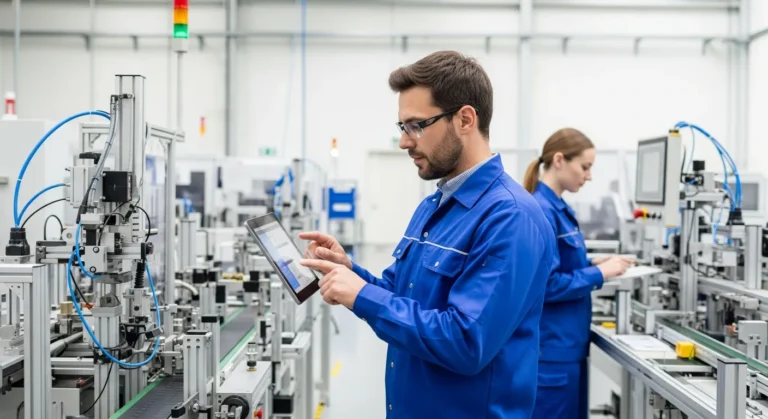
The primary advantage of ERP manufacturing is the absolute transparency it provides. A production supervisor can look at his dashboard and instantly see which work orders are on track and which machines are nearing a breakdown. This level of insight allows him to make proactive decisions rather than reacting to crises after they occur.
- Work Order Tracking: Monitor the progress of every job from inception to shipping.
- Resource Allocation: Ensure that both human labor and machinery are utilized at maximum efficiency.
- Quality Control: Automate checkpoints to ensure every unit meets rigorous standards before leaving the facility.
By optimizing his inventory levels through these insights, a manufacturer can significantly reduce carrying costs and prevent the dreaded “stockout” that halts production lines.
Streamlining the Bill of Materials (BOM)
In complex manufacturing, the Bill of Materials is the blueprint for success. An ERP system manages these multi-level lists with surgical precision. If a design engineer changes a single component, the ERP automatically updates the procurement requirements and alerts the floor manager of the change. This synchronization ensures that he is never building products with obsolete parts or incorrect specifications.
This automation extends to cost estimation. Because the ERP knows the exact cost of every nut, bolt, and hour of labor, the manager can generate highly accurate quotes. He no longer has to guess his margins; he knows them down to the penny before the first machine even starts running.
Financial Integration and Bottom-Line Growth
One of the most overlooked benefits of ERP manufacturing is how it bridges the gap between the shop floor and the accounting department. By integrating financial data with production, a business owner can see the direct impact of manufacturing efficiency on his cash flow. He can identify which product lines are truly profitable and which are draining resources.
This financial clarity is vital for scaling. When a manufacturer decides to expand his operations, he needs historical data to secure financing or justify the investment in new equipment. The ERP provides a clean, auditable trail of his operational success.
Overcoming the Hurdles of Implementation
Transitioning to a robust ERP system is not without its challenges. It requires a disciplined approach to data migration and a commitment to training. A smart leader knows that the software is only as good as the men operating it. He must ensure that his team understands not just how to click buttons, but why the data they enter is critical for the company’s collective success.
Successful implementation usually involves a phased rollout. Instead of trying to flip a switch on the entire factory at once, he might start with inventory management before moving into full-scale shop floor control. This measured approach minimizes downtime and allows his team to build confidence in the new system.
Frequently Asked Questions
What is the difference between generic ERP and manufacturing ERP?
Generic ERPs focus on back-office tasks like HR and basic accounting. Manufacturing ERPs include specialized modules for shop floor control, Bill of Materials (BOM) management, and Master Production Scheduling (MPS) specifically designed for industrial workflows.
How does ERP improve supply chain management?
It provides a manufacturer with real-time data on lead times and vendor performance. He can use this information to negotiate better terms or switch to more reliable suppliers before a shortage impacts his production schedule.
Can small manufacturers benefit from ERP?
Yes. Modern cloud-based ERP solutions allow a smaller manufacturer to access enterprise-level tools without a massive upfront investment in hardware. It helps him compete with larger firms by operating with the same level of data-driven efficiency.
Does ERP manufacturing help with regulatory compliance?
Absolutely. For industries with strict safety or quality standards, the ERP maintains a digital paper trail of every process. This makes it much easier for a manager to pass audits and prove that his products meet all necessary legal requirements.