
ERP vs CRM: Which System Drives More Growth for Your Business?
The Fundamental Divide: Front Office vs. Back Office
Running a business without a clear distinction between ERP and CRM is like a pilot trying to fly a plane with only half the dashboard. One system tells him where he is going, while the other tells him if the engines are actually functioning. To scale effectively in 2026, a leader must understand that these are not competing technologies, but two sides of the same coin.
CRM (Customer Relationship Management) is the front-office powerhouse. It is designed to help a sales manager track leads, manage pipelines, and ensure that no prospect falls through the cracks. On the other hand, ERP (Enterprise Resource Planning) is the back-office engine. It handles the heavy lifting of accounting, supply chain logistics, and human resources. When a CEO evaluates his tech stack, he must realize that CRM brings in the revenue, while ERP manages the costs of fulfilling those promises.
Why CRM is the Salesman’s Best Friend
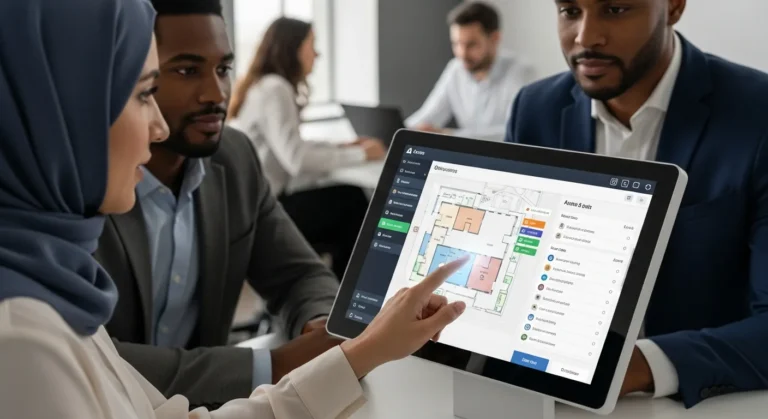
A CRM system is built to maximize the value of every customer interaction. It records every email, every phone call, and every meeting a sales representative has with a client. This data allows him to personalize his pitch and close deals faster. In the modern landscape, CRMs have evolved into predictive tools that tell a user exactly when to follow up with a lead.
- Lead Management: Tracking a prospect from the first click to the final handshake.
- Sales Forecasting: Helping a manager predict his quarterly revenue with high precision.
- Customer Support: Ensuring that after-sales service is as seamless as the initial purchase.
- Marketing Automation: Sending targeted messages based on a user’s specific behavior.
Many professionals often wonder is Salesforce an ERP system because of its massive feature set, but at its core, it remains the gold standard for CRM, focusing primarily on the customer-facing side of the business.
The Power of ERP in Operational Control
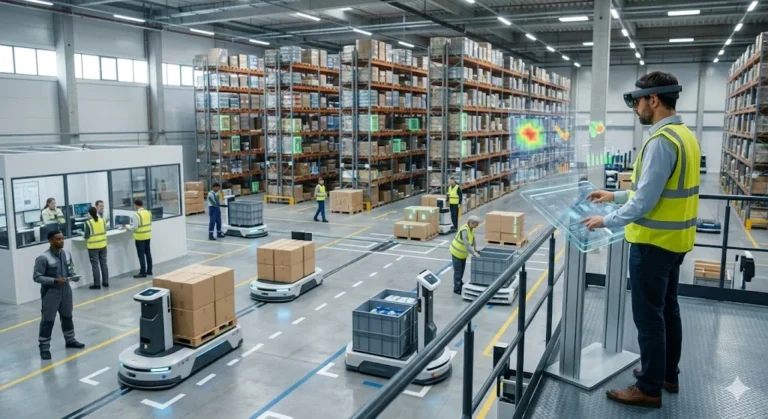
While the CRM is busy hunting for new business, the ERP is making sure the business can actually deliver. An ERP system integrates all the disparate departments of a company into a single database. This prevents the common headache where the sales team sells a product that the warehouse doesn’t actually have in stock.
For a CFO, the ERP is his primary source of truth. It provides real-time visibility into cash flow, payroll, and procurement. By automating these processes, he can reduce manual errors and cut down on administrative overhead. When a company looks at erp integrations for operational efficiency, the goal is always to create a frictionless flow of data from the warehouse floor to the executive suite.
Key Differences at a Glance
To help a decision-maker choose where to invest first, it is helpful to look at the primary focus of each system:
CRM Focus:
• Increasing sales volume and customer retention.
• Improving the speed of the sales cycle.
• Enhancing customer satisfaction through better communication.
• Tracking marketing ROI.
ERP Focus:
• Reducing operational costs and waste.
• Standardizing business processes across departments.
• Managing complex supply chains and inventory.
• Providing accurate financial reporting and compliance.
The Synergy of Integration: When 1+1 Equals 3
The real magic happens when a business owner integrates his ERP and CRM. Without integration, data silos form. A salesman might offer a discount to a client who has a history of late payments, simply because he doesn’t have access to the financial records stored in the ERP.
By connecting the two, the sales team gains visibility into order history and credit limits, while the operations team gets a heads-up on upcoming large orders. This unified approach allows a manager to run a leaner, more responsive organization. He can see the entire lifecycle of a customer, from the moment he was a lead to the moment his final invoice was paid.
Which One Should You Implement First?
The answer depends entirely on the current pain points of the business. If a founder finds that his sales are stagnant and he is losing track of leads, a CRM is his priority. It will provide the structure his sales team needs to grow the top line.
However, if the business is growing but the internal processes are a mess—orders are being lost, inventory is inaccurate, and the books are a nightmare to close—then an ERP is the urgent requirement. He needs to stabilize his foundation before he can build any higher. In 2026, most mid-to-large enterprises find that they cannot survive without both systems working in perfect harmony.
Frequently Asked Questions
Can a small business use an ERP?
Yes, many modern ERP solutions are modular, allowing a small business owner to start with just the accounting or inventory modules and scale up as his company grows.
Is CRM part of an ERP?
Many large ERP suites include a CRM module. However, specialized CRM software often provides deeper functionality for sales-heavy organizations than the basic modules found in a general ERP.
Do I need an ERP if I already have accounting software?
Accounting software handles the money, but an ERP handles the entire business process. If a manager needs to track manufacturing, HR, and supply chain alongside his finances, he needs an ERP.
How long does it take to integrate ERP and CRM?
Integration timelines vary based on the complexity of the systems. A standard cloud-to-cloud integration can take a few weeks, while a custom on-premise setup might take several months for a developer to perfect.