
Is Lawson ERP Still Relevant in 2026? A Deep Dive into Infor’s Powerhouse
The Enduring Legacy of Lawson ERP
Enterprise Resource Planning (ERP) systems often feel like the foundation of a skyscraper—unseen by most, but entirely responsible for keeping the structure standing. Lawson ERP, now a flagship product under the Infor umbrella, has long been that foundation for some of the world’s most complex organizations. While newer, flashier SaaS startups emerge every month, Lawson remains a dominant force because it was built to handle the heavy lifting that lightweight apps simply cannot touch.
In 2026, the conversation around Lawson has shifted from simple on-premise management to sophisticated cloud integration. For a technical lead or a CFO, the decision to stick with Lawson or migrate to Infor CloudSuite isn’t just about features; it’s about maintaining a reliable data architecture that has been refined over decades. He needs a system that understands the nuances of his specific industry, whether that is healthcare, the public sector, or large-scale retail.
Core Modules: S3 vs. M3
To understand Lawson, one must distinguish between its two primary engines: S3 and M3. These aren’t just version numbers; they represent entirely different operational philosophies tailored to specific business needs.
- Lawson S3 (Supply, Staff, and Strategic Ledger): This is the go-to for service-based industries. It excels in human capital management (HCM), procurement, and complex financial reporting. If a manager is overseeing a massive hospital network, he relies on S3 to ensure that staffing levels match patient demand while keeping the books balanced.
- Lawson M3 (Make, Move, and Maintain): Built for organizations that deal with physical goods. It handles manufacturing, distribution, and equipment maintenance. It provides the granular visibility a floor manager needs to track raw materials through the entire production lifecycle.
When comparing these capabilities, it becomes clear that Lawson isn’t a one-size-fits-all solution. A specialist often finds that distinguishing between ERP and standard accounting software is vital here, as Lawson’s depth in supply chain and HR goes far beyond basic ledger entries.
Why Healthcare and Public Sectors Stay Loyal
Lawson ERP has carved out a massive niche in the healthcare sector. The reason is simple: compliance and complexity. A hospital administrator doesn’t just need to track inventory; he needs to track surgical kits, pharmaceutical expiration dates, and specialized labor certifications simultaneously. Lawson’s S3 module was designed with these specific workflows in mind.
In the public sector, the requirements are equally rigid. Government agencies deal with fund accounting and strict budgetary controls that would break a standard commercial ERP. Lawson provides the transparency and audit trails required for public accountability. When a department head reviews his quarterly spend, he needs to know that every dollar is mapped to the correct legislative mandate, and Lawson’s strategic ledger provides that peace of mind.
The 2026 Transition: Moving to Infor CloudSuite
The biggest trend for Lawson users this year is the migration to Infor CloudSuite. Infor has spent years transitioning the robust logic of Lawson into a multi-tenant cloud environment. This move isn’t just about getting rid of local servers; it’s about gaining access to advanced analytics and AI-driven insights that were previously locked away in siloed databases.
For the IT director, this transition is a significant project. He must ensure that custom extensions built over the last decade are either retired or replicated in the new environment. This is where the role of an expert becomes critical. Understanding what an ERP specialist does during these migrations can be the difference between a seamless upgrade and a multi-million dollar bottleneck.
Key Benefits of the Lawson Ecosystem
Despite the rise of newer competitors, Lawson (Infor) maintains several distinct advantages for the enterprise user:
- Industry-Specific Functionality: Unlike generic ERPs that require heavy customization, Lawson comes with “last-mile” features built-in for its target industries.
- Robust HCM: Its human capital management suite remains one of the strongest in the market, particularly for managing complex union rules and shift-based labor.
- Scalability: It is designed for the “upper mid-market” and large enterprises, meaning it won’t buckle under the pressure of millions of transactions.
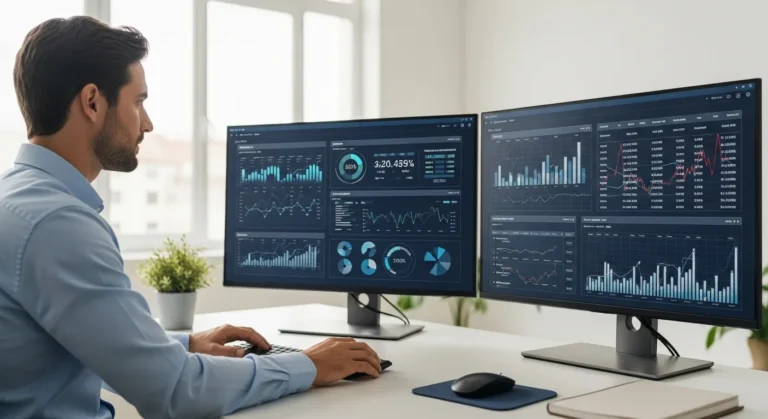
- User Experience: With the introduction of the Infor OS and Coleman AI, the interface has evolved from the clunky grids of the past into a modern, role-based dashboard.
Is Lawson ERP Right for Your Organization?
Choosing Lawson is a commitment to a specific way of doing business. It is best suited for the executive who values deep vertical integration over a generic interface. If he is running a multi-state healthcare system or a global manufacturing firm, the depth of Lawson M3 or S3 provides a level of control that is hard to replicate. However, for a small business or a fast-moving tech startup, the sheer scale of Lawson might be overkill. It requires a dedicated team to maintain and a clear strategic vision to fully leverage its power.
Frequently Asked Questions
Is Lawson ERP the same as Infor?
Lawson Software was acquired by Infor in 2011. Today, the technology is integrated into Infor’s product line, often referred to as Infor Lawson or evolved into Infor CloudSuite solutions.
What industries use Lawson ERP most?
It is most prevalent in healthcare, the public sector (government and education), retail, and manufacturing/distribution industries.
Can Lawson ERP run in the cloud?
Yes, while many legacy versions are on-premise, Infor has transitioned the core Lawson functionality to the cloud via Infor CloudSuite, offering a SaaS model for modern enterprises.
What is the difference between Lawson S3 and M3?
S3 focuses on service-based operations like HR and Finance, while M3 is designed for manufacturing and supply chain management involving physical products.