Why Discrete Manufacturing ERP is the Backbone of Modern Production?
The High-Stakes World of Discrete Production
Imagine a plant manager overseeing the assembly of a high-performance mountain bike. He isn’t just dealing with raw materials; he is managing thousands of individual components, from carbon fiber frames to specialized gear sets. If one bolt is missing, the entire line stops. This is the reality of discrete manufacturing, where products are created from distinct parts that can be touched, counted, and disassembled. To keep this chaos organized, a discrete manufacturing ERP acts as the central nervous system of the operation.
In 2026, the margin for error has vanished. Global supply chains are volatile, and customer demands for customization are at an all-time high. A robust ERP system allows a manufacturer to track every nut, bolt, and hour of labor with surgical precision, ensuring that he meets his deadlines without bloating his inventory costs.
Core Features That Define Discrete ERP Systems
Unlike generic business software, a discrete ERP is built to handle complex Bill of Materials (BOM). A single product might have a multi-level BOM that includes sub-assemblies, raw materials, and outsourced services. The software must be able to explode these BOMs to trigger purchasing requirements the moment a sales order is logged.
- Shop Floor Control: This gives the supervisor real-time visibility into which work centers are active and where bottlenecks are forming.
- Inventory Granularity: It tracks items by serial number or lot, which is vital for warranty management and compliance.
- Quality Assurance: Integrated checkpoints ensure that if a part fails a stress test, the system automatically flags it before it reaches the final assembly.
While some businesses thrive on batch production, understanding the nuances of process manufacturing ERP helps a manager realize why discrete systems require a more granular focus on individual parts rather than formulas or recipes.
The Shift Toward Real-Time Shop Floor Intelligence
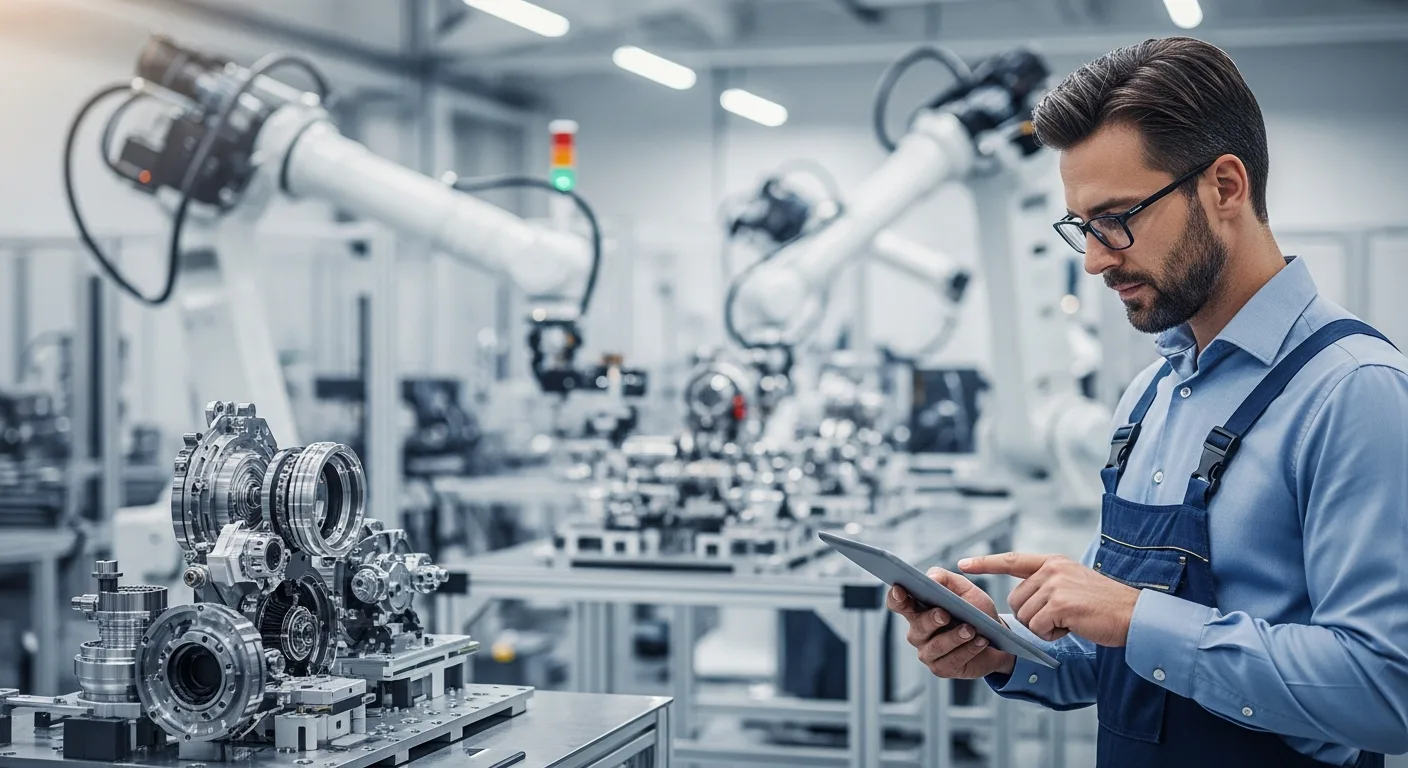
The days of manual data entry are over. Modern discrete manufacturing ERPs now integrate directly with IoT sensors on the factory floor. When a CNC machine completes a cycle, the ERP updates the production status instantly. This level of connectivity allows a production planner to adjust his schedule on the fly if a machine goes down for maintenance.
Efficiency isn’t just a buzzword; it’s the result of leveraging manufacturing ERP software efficiency to reduce waste on the shop floor. By using predictive analytics, the system can warn a manager that he is likely to run out of a specific component three days before it actually happens, giving him enough lead time to contact a secondary supplier.
Managing the Lifecycle: From CAD to Customer
A significant advantage of a dedicated discrete system is its ability to integrate with Product Lifecycle Management (PLM) and CAD software. When an engineer updates a drawing, the changes flow directly into the ERP. This ensures the shop floor is always working from the latest revision, preventing the costly mistake of building products to outdated specifications.
Furthermore, the system handles the “after-market” phase. If a customer calls with a technical issue, the support representative can look up the exact serial number and see every component used in that specific build, along with the technician who assembled it. This level of traceability is no longer a luxury; it is a requirement for staying competitive in a global market.
Overcoming Implementation Hurdles
Implementing a discrete manufacturing ERP is a massive undertaking. It requires a leader who understands that software is only as good as the data fed into it. He must ensure that his team is trained and that legacy data is cleaned before migration. Often, the failure of these systems isn’t due to the code, but due to a lack of clear internal processes. A successful rollout involves mapping out every touchpoint on the factory floor to ensure the software mirrors the physical reality of the production line.
Frequently Asked Questions
What is the main difference between discrete and process manufacturing ERP?
Discrete manufacturing ERP focuses on individual units and assemblies (like cars or furniture) that can be broken down. Process manufacturing ERP handles products made using formulas or recipes (like chemicals or beverages) that cannot be easily disassembled once created.
How does a discrete ERP improve inventory management?
It uses automated Material Requirements Planning (MRP) to calculate exactly what parts are needed and when. This prevents overstocking expensive components while ensuring the production line never starves for parts.
Can a discrete ERP handle custom orders?
Yes, most modern systems include a Configure-Price-Quote (CPQ) module. This allows a salesperson to select specific features for a customer, which the ERP then automatically converts into a custom BOM and routing for the shop floor.
Is cloud-based ERP better for discrete manufacturers?
Cloud-based systems offer better scalability and remote access, which is useful for managers who need to monitor multiple plants. However, some large-scale manufacturers still prefer on-premise solutions for maximum control over their data and integration with local hardware.