
Is Your Business Ready for an Accounting ERP? Key Benefits and Trends for 2026
The Shift from Bookkeeping to Strategic Financial Intelligence
Gone are the days when a CFO could rely on disconnected spreadsheets and manual data entry to steer his company toward growth. In 2026, the speed of business demands more than just a record of what happened; it requires a predictive engine that connects every financial pulse to the rest of the organization. This is where an accounting ERP (Enterprise Resource Planning) system becomes indispensable.
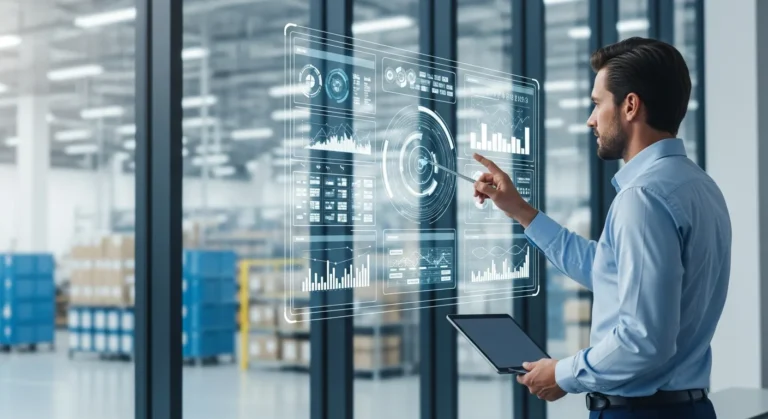
Unlike basic accounting software that merely tracks debits and credits, an ERP integrates financial data with supply chain, human resources, and sales. When a manager reviews his quarterly reports, he isn’t just looking at static numbers. He is seeing a live reflection of his entire operation, allowing him to make decisions based on real-time reality rather than month-old echoes.
Core Features of a Modern Accounting ERP
To truly serve a growing enterprise, an accounting ERP must go beyond the basics. It acts as the single source of truth for every financial transaction within the company. Here are the non-negotiable features a leader should look for:
- Automated General Ledger: Eliminates manual entry errors by automatically pulling data from integrated modules like procurement and sales.
- Multi-Entity Consolidation: For the executive managing several subsidiaries, this feature automates the complex process of merging financial statements across different regions and currencies.
- Advanced Tax Compliance: In 2026, tax laws change rapidly. A robust ERP updates its logic automatically to ensure the user remains compliant with local and international regulations.
- Real-Time Cash Flow Forecasting: Using historical data, the system helps a business owner predict his future liquidity, ensuring he has the capital needed for upcoming investments.
Why Integration Trumps Standalone Software
Many small business owners start with simple tools, but as they scale, the limitations become painful. When a founder evaluates his options, he often explores the erp and accounting software comparison to determine if a standalone tool or a full-scale suite is necessary. The primary advantage of the ERP model is the elimination of data silos.
When the sales team closes a deal, the accounting ERP immediately updates the accounts receivable, triggers an invoice, and notifies the warehouse. This seamless flow ensures that no one is working with outdated information. A controller can trust that his balance sheet is accurate at any given second, rather than waiting for a manual end-of-month reconciliation.
The Impact of AI and Automation in 2026
The landscape of financial management has been fundamentally altered by machine learning. The rise of ai-driven erp systems has transformed how a financial analyst handles his daily tasks. Instead of spending hours on bank reconciliations, he now supervises an algorithm that handles 99% of the matching automatically.
AI within an accounting ERP can now detect anomalies that might indicate fraud or simple human error. If a vendor submits a duplicate invoice or if a payment pattern looks suspicious, the system flags it for the manager’s review before the money ever leaves the account. This proactive approach saves both time and capital, allowing the finance team to focus on high-level strategy instead of clerical policing.
Choosing the Right System for Your Growth
Selecting an accounting ERP is a long-term commitment. A CEO must consider not just where his company is today, but where he expects it to be in five years. Scalability is the most critical factor. The system should be able to handle an increase in transaction volume and the addition of new users without requiring a complete overhaul.
Security is another paramount concern. As financial data is the lifeblood of any organization, the ERP must offer robust encryption, multi-factor authentication, and regular automated backups. A CTO should ensure that the provider offers a clear roadmap for future updates, ensuring the software won’t become obsolete as technology continues to evolve.
Frequently Asked Questions
What is the main difference between accounting software and an accounting ERP?
Accounting software focuses strictly on financial records like invoices and payroll. An accounting ERP integrates those financial functions with other business processes like inventory, sales, and HR, providing a unified view of the entire company.
Is an accounting ERP too expensive for a mid-sized business?
While the initial investment is higher than basic software, the long-term ROI is significant. By automating manual tasks and reducing errors, a business owner often finds that the system pays for itself through increased efficiency and better resource allocation.
How long does it take to implement an accounting ERP?
Implementation timelines vary based on the complexity of the business. For a mid-sized company, it typically takes between three to nine months to fully migrate data, train staff, and go live with the new system.
Can an accounting ERP help with international business?
Yes, most modern ERPs are designed for global operations. They handle multiple currencies, different tax jurisdictions, and various international reporting standards, making it easier for a manager to expand his business across borders.