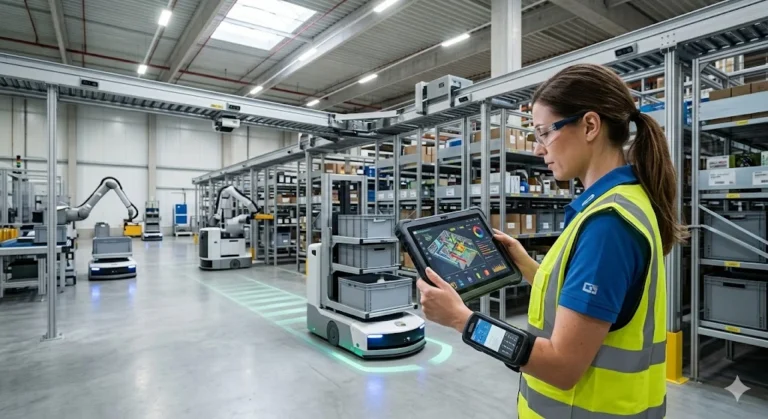

How Can Distribution ERP Software Solve Your Supply Chain Bottlenecks?
The High Stakes of Modern Distribution
Managing a distribution business in 2026 feels like juggling chainsaws while riding a unicycle. With customer expectations for next-day delivery becoming the baseline and global supply chains remaining volatile, a distributor cannot rely on spreadsheets or legacy systems. He needs a centralized brain that connects every moving part of his operation. This is where distribution ERP software steps in, transforming a chaotic warehouse into a precision-tuned machine.
A distributor who fails to modernize his tech stack often finds himself buried under excess stock he can’t sell, while simultaneously facing backorders for his most popular items. The right ERP system eliminates these blind spots by providing a single source of truth for inventory, sales, and logistics.
Core Features That Drive Distribution Efficiency
Not all ERPs are created equal. A system designed for a law firm won’t help a wholesaler manage a 50,000-square-foot warehouse. To truly gain a competitive edge, a distributor must look for specific functionalities that address the unique challenges of moving physical goods.
- Real-Time Inventory Visibility: Knowing exactly what is on the shelf, what is in transit, and what is committed to orders prevents the dreaded “out of stock” notification.
- Advanced Demand Forecasting: Modern systems use historical data and market trends to tell a manager what he needs to buy before he even realizes he’s running low.
- Warehouse Management (WMS): From bin tracking to pick-and-pack optimization, a built-in WMS ensures that every worker in the warehouse is taking the most efficient path possible.
- Omnichannel Order Management: Whether an order comes from an e-commerce site, an EDI connection, or a direct sales call, the ERP should process it seamlessly.
When evaluating these tools, it is helpful to understand the specific distribution ERP benefits that lead to long-term ROI, such as reduced carrying costs and improved order accuracy.
The Role of AI and Automation in 2026
We have moved past the era where ERP was just a digital filing cabinet. Today, the best distribution ERP software leverages artificial intelligence to handle the heavy lifting. For instance, instead of a purchasing manager manually reviewing thousands of SKUs, the system can automatically generate purchase orders based on lead times and seasonal fluctuations.
Automation also extends to the shipping dock. By integrating directly with carriers, the software can automatically select the most cost-effective shipping method for every package. This level of supply chain visibility ensures that the distributor knows exactly where his margins are being squeezed and where he can save money.
Overcoming Implementation Hurdles
The biggest mistake a distributor can make is treating an ERP rollout as a purely IT project. It is a fundamental shift in how he does business. Success requires a clear roadmap and buy-in from every department. He must ensure his data is clean before migrating it; otherwise, he is simply automating his existing mistakes.
Training is equally vital. If the warehouse staff finds the new interface too complex, they will revert to manual workarounds, defeating the purpose of the investment. A phased approach—starting with core inventory and then adding modules like CRM or advanced analytics—often yields better results than a “big bang” launch.
Choosing the Right Vendor
The market is flooded with options, from massive enterprise suites to niche players. A distributor should prioritize scalability. He doesn’t just need a system for the business he has today; he needs one that can handle the volume he expects in five years. Cloud-based solutions have become the standard, offering lower upfront costs and the ability for a manager to check his stock levels from his phone while he is off-site.
Finally, consider the support ecosystem. Does the vendor understand the specific nuances of your industry, whether it’s food and beverage with its strict expiration tracking or industrial parts with complex kitting requirements? The right partner will act as a consultant, not just a software provider.
Frequently Asked Questions
What is the difference between a standard ERP and a distribution ERP?
A standard ERP is general-purpose, covering accounting and HR. A distribution ERP includes specialized modules for warehouse management, supply chain logistics, and complex inventory tracking that general systems lack.
How long does it take to implement distribution ERP software?
Implementation typically takes between 4 to 10 months, depending on the size of the company and the complexity of the data being migrated. A phased rollout can help manage this timeline.
Can distribution ERP help with e-commerce?
Yes, modern distribution ERPs offer direct integrations with platforms like Shopify, Magento, and Amazon, ensuring that online sales are reflected in inventory levels immediately.