How Does ERP Procurement Streamline Modern Supply Chains?
The Shift from Manual Sourcing to ERP-Driven Procurement
Procurement is no longer just about signing checks and waiting for boxes to arrive. In 2026, a procurement manager must act as a strategic architect of his company’s supply chain. Relying on fragmented spreadsheets or legacy systems leads to missed discounts, late deliveries, and a complete lack of visibility. ERP procurement centralizes every interaction, from the initial requisition to the final payment, ensuring he has a single source of truth.
When a manager moves his operations into an ERP framework, he eliminates the friction of manual data entry. He can see exactly where his capital is tied up and which vendors are failing to meet their lead times. This level of control is what separates a reactive business from one that anticipates market shifts before they happen.
Core Components of a Robust ERP Procurement System
A high-tier ERP procurement module isn’t just a digital filing cabinet. It is a dynamic engine that handles several critical functions simultaneously:
- Purchase Requisition Management: He can set up automated approval workflows so that requests move from a department head to the finance office without getting lost in an inbox.
- Vendor Performance Tracking: The system logs every delay and quality issue, allowing him to negotiate better terms based on hard data rather than gut feelings.
- Automated Sourcing: By setting minimum stock levels, the ERP can trigger a Request for Quotation (RFQ) automatically when inventory dips too low.
When a procurement officer focuses on scaling his purchasing workflows, he needs a system that doesn’t buckle under volume. The right ERP ensures that as his order count grows, his administrative overhead stays flat.
How ERP Procurement Solves the “Data Silo” Problem
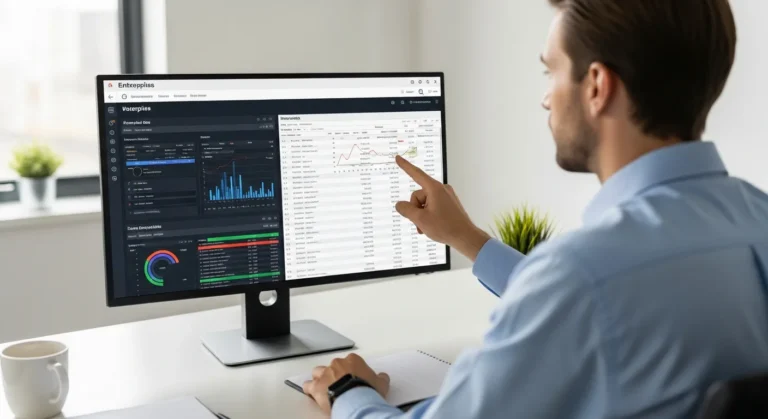
One of the biggest headaches for a business leader is when the warehouse thinks they have stock, but the procurement team knows the shipment was canceled. ERP procurement bridges this gap by integrating directly with inventory and finance modules. When he approves a purchase order, the inventory system immediately updates its “expected stock” count, and the finance team sees a projected liability on their dashboard.
To truly understand the value of this integration, he should look at an erp and accounting software comparison to see how these modules talk to each other. This connectivity prevents the common disaster of over-ordering materials that the company cannot afford or doesn’t have the space to store.
Maximizing ROI Through Automated Vendor Management
Managing hundreds of vendors is a logistical nightmare if done manually. Within an ERP, a manager can categorize his suppliers by risk, cost, and reliability. He can set up a Supplier Portal where vendors upload their own invoices and track their own payment status. This self-service model saves him hours of repetitive communication every week.
Furthermore, the ERP can analyze historical pricing trends. If a supplier raises prices by 5%, the system alerts him immediately, allowing him to pivot to a pre-vetted alternative before his margins take a hit. He isn’t just buying goods; he is protecting his bottom line through data-driven decision-making.
Future Trends in ERP Procurement for 2026
The landscape of procurement is moving toward predictive sourcing. By 2026, ERP systems are using machine learning to analyze global shipping disruptions and weather patterns. If a storm is brewing in a region where his primary supplier is located, the system suggests he place an early order or switch to a secondary vendor in a different geography.
He can also expect deeper blockchain integration for contract management. This ensures that once he agrees to a price with a vendor, that contract is immutable and automatically enforced by the system’s payment logic. No more disputes over “hidden fees” or outdated price lists.
Frequently Asked Questions
What is the difference between procurement and purchasing in an ERP?
Purchasing is the transactional act of buying goods, while procurement is the strategic process of sourcing, negotiating, and managing the entire supplier relationship. An ERP handles both, but its real value lies in the strategic procurement data it provides to the manager.
Can ERP procurement help with compliance?
Yes. He can configure the system to only allow purchases from approved, compliant vendors. This ensures that his company meets all regulatory and ethical standards without him having to manually audit every single transaction.
How long does it take to implement an ERP procurement module?
Implementation varies depending on the complexity of his supply chain, but most modern cloud-based modules can be configured and integrated within three to six months. He should focus on data cleansing before migration to ensure the transition is smooth.