
Which Manufacturing ERP Modules Are Essential for Your Factory?
The Core Engine: Production Planning and Scheduling
Manufacturing isn’t just about making things anymore; it’s about managing data at the speed of light. A production manager knows that without a robust planning module, his shop floor quickly descends into chaos. This module acts as the brain of the operation, determining what to build, when to build it, and which machines are available.
By using Master Production Scheduling (MPS) and Material Requirements Planning (MRP), he can ensure that raw materials arrive exactly when needed. This prevents the dreaded downtime that eats into profit margins. When he integrates this with real-time data, he can pivot quickly if a machine breaks down or a high-priority order arrives unexpectedly.
Inventory Management: Beyond Simple Stock Tracking
Inventory is often a manufacturer’s largest asset, but it can also be his biggest liability if managed poorly. Modern manufacturing ERP modules for inventory go far beyond counting boxes. They provide deep visibility into raw materials, work-in-progress (WIP), and finished goods.
A smart manager uses these tools for optimizing stock levels across multiple locations, ensuring he never carries too much overhead. Features like lot tracking and serial number management are non-negotiable for industries where traceability is a legal requirement. He can track a single component from the moment it enters the warehouse until it leaves as part of a finished product.
Shop Floor Control and Real-Time Visibility
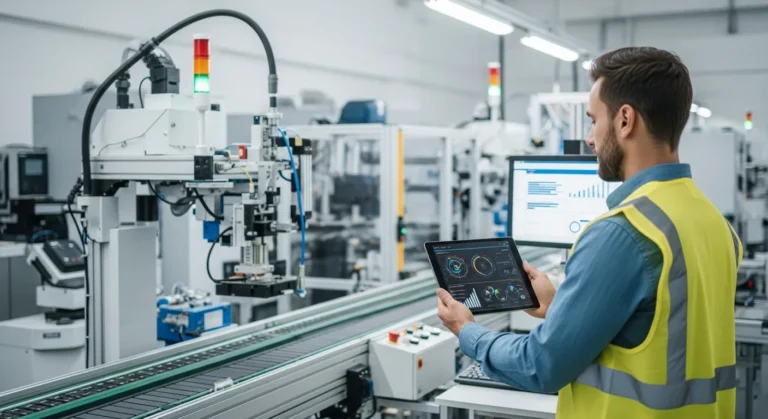
The shop floor is where the value is created, and a Shop Floor Control (SFC) module provides the visibility a supervisor needs to keep things moving. Instead of relying on paper trails or end-of-day reports, he gets a live feed of production progress. He can see exactly which workstation is lagging and which operator is exceeding targets.
- Work Order Management: Tracking the status of every job in real-time.
- Labor Tracking: Understanding how many man-hours are spent on specific tasks.
- Machine Integration: Connecting directly to equipment to monitor health and output.
This level of detail is vital for driving operational efficiency in modern plants, allowing the manager to make data-backed decisions rather than relying on gut feeling.
Quality Management and Compliance
Quality isn’t an afterthought; it’s a competitive necessity. A dedicated quality module allows a manufacturer to build inspection points directly into the production process. If a part fails a check, the system can automatically trigger a non-conformance report, preventing the defective item from moving further down the line.
He can set up automated alerts for calibration schedules and maintain digital records for audits. This reduces the risk of human error and ensures that his facility remains compliant with ISO or other industry-specific standards without a mountain of paperwork.
Financial Management and Costing
At the end of the day, manufacturing is a numbers game. The financial module in an ERP system ties every physical action to a dollar value. When a worker pulls a part from inventory, the system updates the Cost of Goods Sold (COGS) instantly. This gives the CFO a clear picture of his margins in real-time.
Advanced costing modules allow him to analyze Standard vs. Actual costs. If a specific production run cost 10% more than expected, he can drill down to see if the issue was rising material prices, machine inefficiency, or excessive overtime. This granular data is what allows a business to remain profitable in a volatile market.
Supply Chain and Procurement
A manufacturer is only as strong as his weakest supplier. The procurement module automates the purchasing process by triggering purchase orders when stock hits a certain threshold. He can manage vendor performance, tracking who delivers on time and who consistently sends sub-par materials.
By streamlining the supply chain, he reduces lead times and improves his ability to promise accurate delivery dates to his customers. This module ensures that the purchasing department isn’t just reacting to shortages but is proactively managing the flow of goods into the factory.
Frequently Asked Questions
What are the most important ERP modules for manufacturing?
The most critical modules include Production Planning, Inventory Management, Quality Control, and Financial Management. These form the backbone of any manufacturing operation by connecting the shop floor to the back office.
Can a small manufacturer start with just a few modules?
Yes, many modern ERP systems are modular. A manager can start with core functions like inventory and production planning, then add modules like Maintenance or CRM as his business grows and his needs become more complex.
How does a shop floor module help a production manager?
It provides him with real-time data on machine uptime, operator efficiency, and job status. This allows him to identify bottlenecks immediately and reallocate resources to keep production on schedule.