Is Salesforce an ERP System? Navigating the CRM and ERP Landscape
Defining Salesforce: CRM vs. ERP
In the modern enterprise landscape, the line between different software categories often blurs. When a business leader evaluates his digital infrastructure, he frequently asks: is Salesforce an ERP system? To provide a direct answer: No, Salesforce is not a traditional Enterprise Resource Planning (ERP) system. At its core, Salesforce is a Customer Relationship Management (CRM) platform.
While an ERP focuses on the back-office—managing finances, supply chains, and human resources—a CRM is built for the front-office. It is designed to help a professional manage his sales pipeline, marketing efforts, and customer service interactions. However, the confusion is understandable because Salesforce has evolved into a massive platform that can host ERP-like functionalities through its ecosystem.
The Core Differences Between CRM and ERP
To understand why Salesforce is often mistaken for an ERP, it is helpful to look at the primary objectives of each system. An ERP is the central nervous system of a company’s internal operations. It ensures that the procurement officer has what he needs to keep production running and that the accountant can reconcile the books at the end of the month. You can explore more about these distinctions in our guide on comparing enterprise resource planning and accounting suites.
Salesforce, conversely, focuses on the customer lifecycle. It tracks a lead from the moment he first interacts with a brand until he becomes a loyal client. The platform is optimized for Sales Cloud, Service Cloud, and Marketing Cloud, all of which prioritize external relationships rather than internal inventory or payroll management.
How Salesforce Can Function Like an ERP
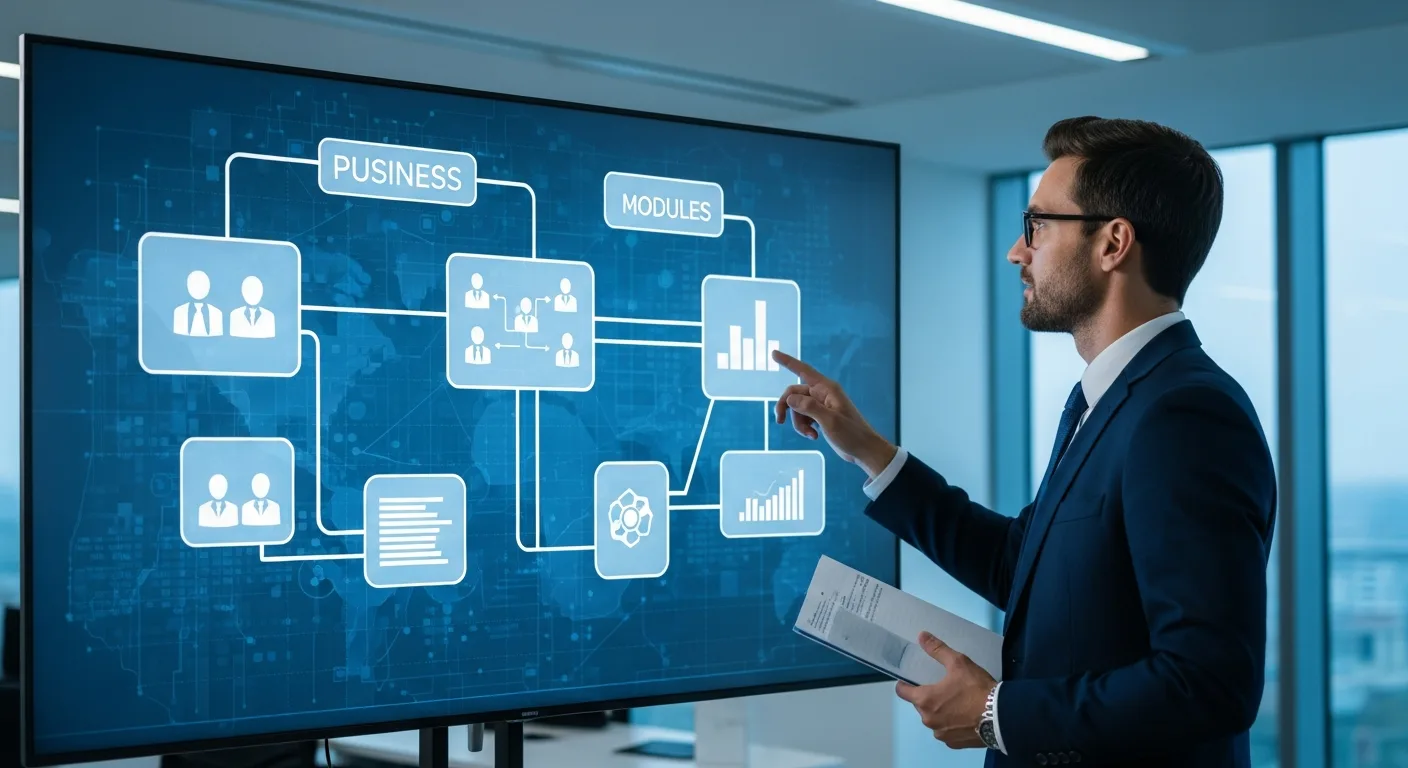
While Salesforce is not an ERP out of the box, it is built on a highly flexible architecture called the Lightning Platform (formerly Force.com). This allows developers to build almost any business application on top of the Salesforce infrastructure. Consequently, many companies use third-party applications from the Salesforce AppExchange to add ERP capabilities to their existing CRM.
For instance, a manufacturing manager might integrate a specialized tool like Rootstock or Certinia (formerly FinancialForce) into his Salesforce environment. By doing so, he gains access to inventory management, order fulfillment, and financial reporting without leaving the Salesforce interface. This modular approach allows him to create a “best-of-breed” system that feels like a unified ERP.
The Benefits of an Integrated Strategy
For many organizations, the goal isn’t necessarily to replace an ERP with Salesforce, but to ensure the two systems talk to each other perfectly. When a sales representative closes a deal in Salesforce, he wants that information to flow automatically into the ERP so that the finance team can generate an invoice and the warehouse can ship the product. When selecting the right platform for industrial operations, integration capability is often the deciding factor.
By connecting Salesforce with a traditional ERP like SAP or Oracle, a business owner ensures that his data remains consistent across all departments. This prevents silos and ensures that every executive has a single version of the truth when he reviews his quarterly performance reports.
Is Salesforce Right for Your Back-Office Needs?
Deciding whether to use Salesforce as your primary business engine depends on your specific needs. If your primary focus is on high-growth sales and customer engagement, Salesforce is the gold standard. If you require deep manufacturing execution systems (MES) or complex global financial consolidation, you will likely need a dedicated ERP to work alongside it.
In 2026, the trend is moving toward platform-agnostic data layers where the distinction between CRM and ERP matters less than the fluidity of the data itself. A smart IT director will focus on how he can leverage the Salesforce API to bridge the gap between his front-office heroes and his back-office specialists.
Frequently Asked Questions
Does Salesforce have an accounting module?
Salesforce does not have a native accounting module. However, many third-party apps available on the AppExchange, such as AccountingSeed or Certinia, allow a user to manage his ledgers and financial statements directly within the Salesforce environment.
Can Salesforce replace SAP or Oracle?
Generally, Salesforce cannot replace the full breadth of SAP or Oracle ERP systems, especially regarding heavy manufacturing or complex supply chain logistics. It is more common for a company to use Salesforce for sales and one of the others for its core operations.
What is the Salesforce AppExchange?
The AppExchange is an enterprise cloud marketplace where a developer can list his applications. It allows Salesforce users to find and install specialized tools for everything from document generation to full-scale ERP functionality.
Is Salesforce considered SaaS?
Yes, Salesforce is a pioneer of the Software as a Service (SaaS) model. It is a cloud-based platform, meaning a user accesses his data via a web browser or mobile app rather than installing software on his local servers.