
Why ERP for Small Companies is No Longer Optional in 2026?
The Breaking Point of Manual Operations
Most small business owners realize too late that their “organized” spreadsheets are actually a ticking time bomb of data silos and manual errors. As a founder scales his operations, he quickly discovers that tracking inventory in one file, payroll in another, and customer data in a third leads to total chaos. In 2026, the competitive gap is widening between those who guess and those who know.
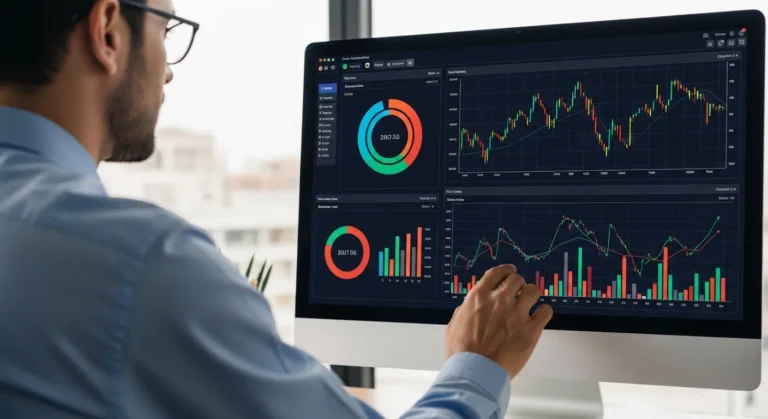
An ERP for small companies isn’t just a luxury for the corporate elite anymore. It is the central nervous system that allows a manager to see exactly where his money is going and where his bottlenecks are hiding. When a founder decides to upgrade his operations, he often looks for a robust erp system for small business that can scale alongside his growth without requiring a massive IT department to maintain.
Why Small Companies are Moving Beyond Spreadsheets
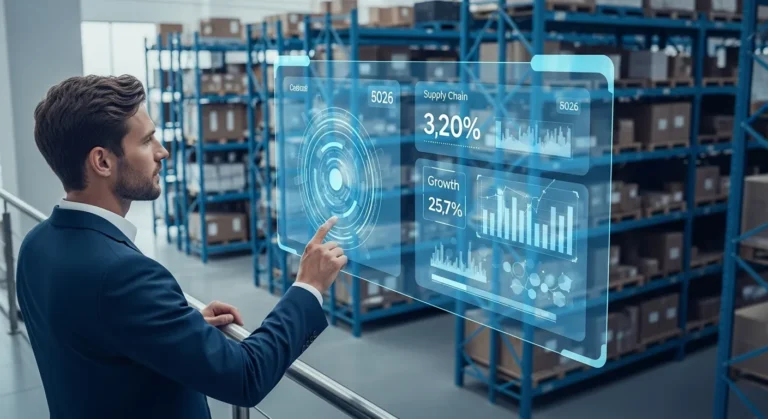
The shift toward integrated software is driven by the need for real-time visibility. A business owner cannot afford to wait until the end of the month to realize his margins are shrinking. He needs to know now. Modern ERP solutions provide a single source of truth, ensuring that when a sale is made, the inventory is updated, the invoice is generated, and the accounting ledger is balanced automatically.
- Elimination of Duplicate Entry: No more copying data from a CRM into an accounting tool.
- Improved Accuracy: Human error is the leading cause of financial discrepancies in small firms.
- Better Forecasting: A manager can use historical data to predict future demand with high precision.
Key Features to Look for in 2026
Not all ERPs are created equal. For a small company, the goal is to find a balance between power and simplicity. He doesn’t need a thousand features he will never use; he needs a modular system that solves his specific pain points. It is vital for him to understand the erp and accounting software comparison before committing to a long-term contract, as some tools are merely glorified ledgers while others offer full-scale resource planning.
Cloud-Native Architecture: In 2026, on-premise servers are a liability for small teams. A cloud-based ERP allows a manager to check his dashboard from his phone while he is on-site or traveling, ensuring he never loses touch with his business operations.
Automation Capabilities: Look for systems that handle the heavy lifting. Whether it is automated reordering of stock or AI-driven expense categorization, the software should work for the user, not the other way around.
The Cost of Implementation: Budgeting for Success
The biggest hurdle for any small business owner is the perceived cost. However, the landscape has shifted toward SaaS (Software as a Service) models. Instead of a $50,000 upfront license fee, he can now pay a manageable monthly subscription. This shifts the expense from a capital investment to an operational one, making it much easier on his cash flow.
He should also account for the “hidden” costs of implementation. This includes the time he and his team will spend learning the new interface and the potential downtime during the data migration phase. A wise manager views this not as a cost, but as an investment in his company’s future scalability.
Overcoming the Learning Curve
Resistance to change is the primary reason software implementations fail. A leader must champion the new system and ensure his team understands the benefits. If he treats the ERP as a chore, his employees will too. If he treats it as a tool that makes their jobs easier and eliminates tedious manual tasks, adoption will be much smoother.
Training should be bite-sized. Rather than a week-long intensive course, he should encourage his staff to master one module at a time—starting with the most critical functions like sales or inventory management.
Frequently Asked Questions
Is ERP too complex for a company with under 20 employees?
No. Many modern ERPs are designed specifically for micro-businesses. They offer a simplified UI and allow the owner to turn off features he doesn’t need, keeping the experience clean and focused.
How long does it take to see a return on investment?
Most small companies report significant time savings within the first three months. Financial ROI typically follows within the first year as waste is reduced and billing cycles are shortened.
Can I integrate my existing CRM with a new ERP?
Yes, most 2026 ERP solutions offer native integrations or robust APIs. This allows a manager to keep the tools he loves while connecting them to a more powerful backend system.