
Why Retail ERP Systems are the Secret to Scaling Your Store in 2026?
The End of Fragmented Retail Operations
A retailer who manages five different spreadsheets just to track his stock is a retailer who is losing money. In 2026, the gap between successful merchants and those struggling to stay afloat is defined by their ability to centralize data. Retail ERP systems have moved beyond being a luxury for big-box stores; they are now the operational engine for any merchant serious about growth.
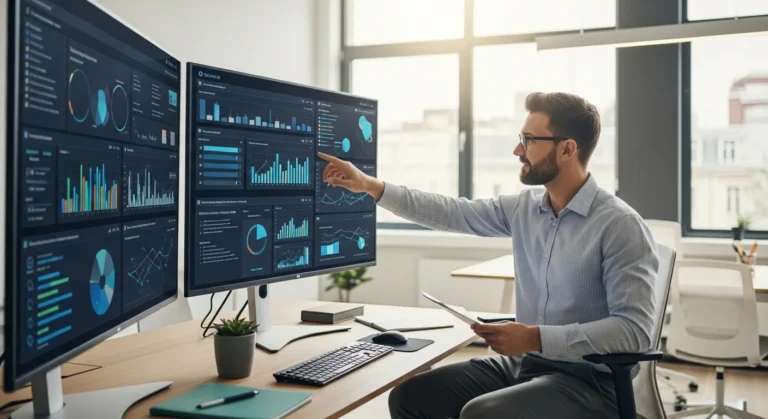
When a business owner integrates a retail ERP, he isn’t just buying software; he’s establishing a single source of truth. This system connects the front-end point of sale (POS) with back-end inventory, procurement, and accounting. He no longer has to guess why his margins are shrinking or which warehouse is holding onto dead stock. The data is there, in real-time, allowing him to make decisions based on facts rather than intuition.
Core Features That Drive Retail Profitability
Modern retail ERP systems are built to handle the complexity of omnichannel commerce. If a customer buys a pair of boots on a website at 2:00 AM, the system must immediately update the stock levels for the physical storefront to prevent a double-sale. This level of synchronization is what separates professional operations from amateur ones.
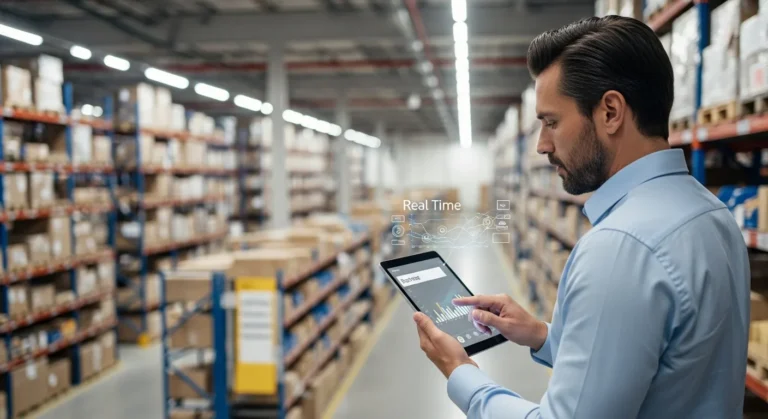
- Real-Time Inventory Tracking: He can monitor stock movements across multiple locations, reducing the risk of overstocking or stockouts.
- Integrated POS: Transactions at the register flow directly into the financial ledger, eliminating manual data entry errors.
- Customer Relationship Management (CRM): He can track a shopper’s history to offer personalized discounts, increasing the lifetime value of every customer.
- Automated Procurement: The system can be set to trigger purchase orders automatically when stock hits a specific threshold.
Understanding how retail ERP software transforms inventory is the first step toward eliminating the waste that kills small and medium-sized businesses. By automating the mundane, the merchant frees up his time to focus on strategy and expansion.
Solving the Omnichannel Nightmare
The modern shopper expects a seamless experience. He might browse on his phone, ask a question via a chatbot, and eventually pick up the item in-store. Without a robust retail ERP system, managing this journey is a logistical nightmare. The ERP acts as the glue, ensuring that the price he sees online matches the price in the aisle.
For the store manager, this means he can fulfill orders from the most efficient location. If a customer in New York orders a product that is out of stock in the local warehouse but available in a New Jersey storefront, the ERP identifies this instantly. He can then route the shipment to save on time and shipping costs, keeping his customer happy and his margins healthy.
Choosing the Right System for Your Business Model
Not every ERP is built the same. A high-volume grocery retailer has vastly different needs than a luxury boutique owner. When a merchant evaluates his options, he must look for scalability and integration capabilities. A system that works for two stores must be able to handle twenty without a complete overhaul of the architecture.
He should also consider the broader erp retail benefits such as improved employee management and more accurate sales forecasting. A good system doesn’t just record what happened yesterday; it uses historical data to predict what he will need tomorrow. This predictive power allows him to capitalize on trends before his competitors even notice them.
The Financial Impact of Centralized Data
At the end of the fiscal year, the retailer’s biggest headache is often reconciliation. When his sales data, tax obligations, and supplier invoices are scattered across different platforms, he spends weeks cleaning up the mess. A retail ERP system automates this process. He can generate a profit and loss statement with a few clicks, giving him a clear view of his financial health at any moment.
This transparency is vital when he seeks a loan or looks for investors. He can prove his efficiency with hard data, showing exactly how he has optimized his supply chain and reduced overhead. In the competitive landscape of 2026, this level of professional financial management is a significant competitive advantage.
Frequently Asked Questions
What is the difference between a standard ERP and a retail ERP?
A standard ERP focuses on general business processes like HR and accounting, while a retail ERP includes specialized modules for POS, e-commerce integration, and multi-channel inventory management tailored for merchants.
Can a small retailer afford an ERP system?
Yes, many cloud-based ERP providers offer tiered pricing models. A small business owner can start with basic features and add more modules as his store grows and his revenue increases.
How long does it take to implement a retail ERP?
Implementation time varies depending on the complexity of the business. For a mid-sized retailer, it typically takes between three to six months to fully migrate data and train staff on the new system.
Does a retail ERP help with online sales?
Absolutely. It syncs your online storefront with your physical inventory, ensuring that you never sell an item online that has already been purchased in-store.