Why ProShop ERP is the Gold Standard for Modern Machine Shops?
Beyond Traditional ERP: The Digital Manufacturing Ecosystem
Most ERP systems are built by accountants for accountants. They track dollars and cents but fail to understand the grit and precision of a CNC spindle or the complexity of a multi-level bill of materials. ProShop ERP breaks this mold by functioning as a Digital Manufacturing Ecosystem (DME). It combines the financial tracking of an ERP with the execution power of a Manufacturing Execution System (MES) and the compliance rigor of a Quality Management System (QMS).
When a shop owner implements ProShop, he isn’t just buying a database; he is installing a digital nervous system. The software was born on a shop floor, designed by guys who spent years managing high-tolerance aerospace parts. This pedigree is evident in how the system handles everything from initial quoting to the final shipping label without a single sheet of paper changing hands.
Streamlining the Shop Floor with Paperless Workflows
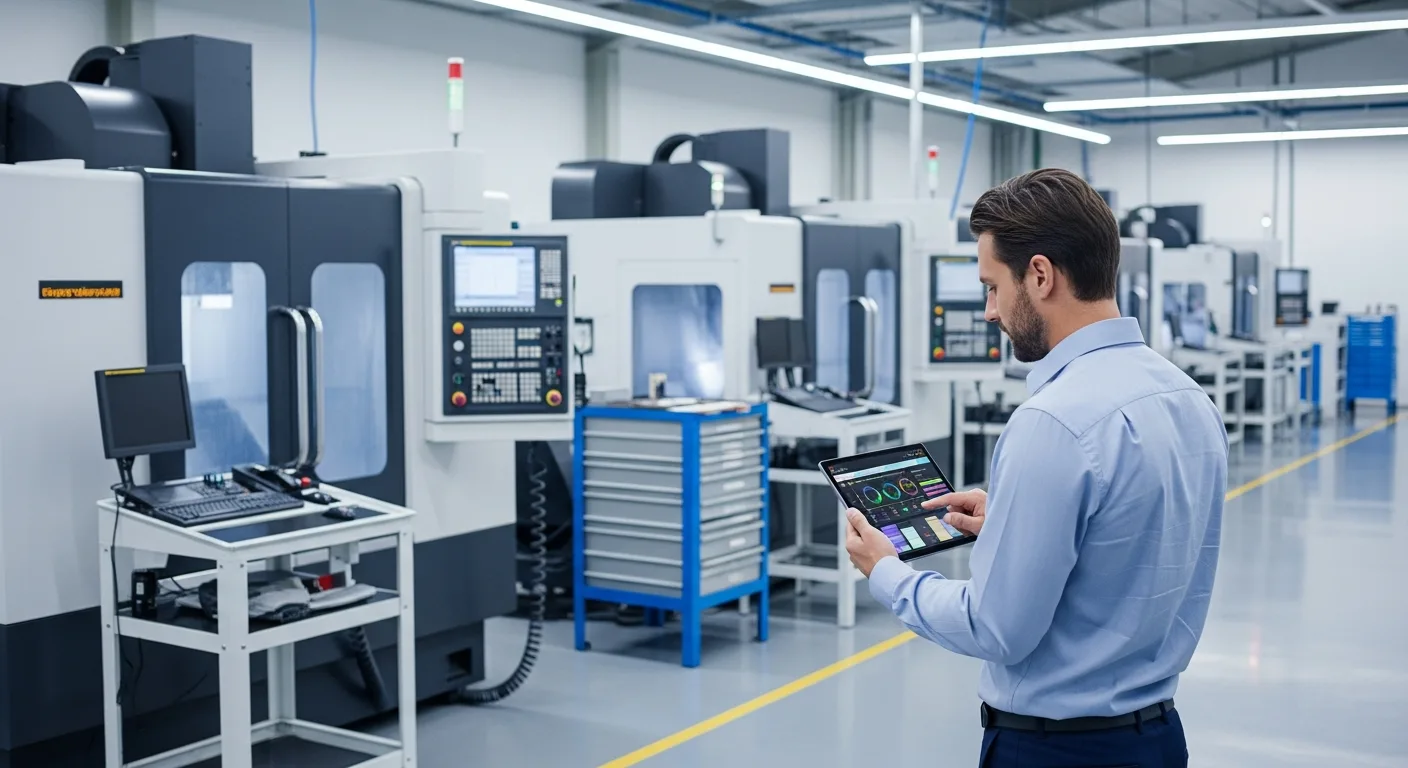
The biggest bottleneck in any machine shop is the “paper traveler.” These folders get greasy, lost, or filled with outdated revisions. ProShop eliminates this chaos entirely. Every machinist has a tablet or workstation where he accesses real-time data, 3D models, and specific work instructions. This ensures that he is always working on the correct revision, reducing scrap rates and expensive rework.
While many owners look for manufacturing ERP software efficiency to cut overhead, ProShop delivers it by automating data collection. Instead of a foreman walking the floor to check job statuses, he can see exactly which spindle is turning and which job is lagging from a central dashboard. This level of visibility allows him to make informed decisions about scheduling and capacity planning on the fly.
Integrated Quality Management and Compliance
For shops serving the aerospace, defense, or medical industries, compliance is a massive administrative burden. ProShop ERP treats quality as a core function rather than an afterthought. It integrates AS9100 and ISO 9001 requirements directly into the workflow. When a machinist completes a task, the system can force a quality check or a tool wear update before he can move to the next step.
- Real-time Traceability: Track material certifications and heat lots back to the original vendor with two clicks.
- Digital Inspection Reports: Generate first-article inspection reports (FAIRs) automatically as data is entered on the floor.
- Gage Calibration: The system alerts the manager when a tool is out of calibration, preventing its use in production.
By embedding these checks into the daily routine, the shop manager ensures that his team stays compliant without the need for a dedicated room full of filing cabinets. This integration is far more effective than trying to bolt a separate quality module onto the best CRM for manufacturing business or a generic accounting tool.
Real-Time Costing and Profitability Insights
Understanding the true cost of a part is the difference between a profitable year and a closing sale. ProShop tracks every second of labor, every cent of tooling, and every ounce of material in real-time. If a specific job is running over budget because a certain alloy is eating through end mills faster than expected, the owner knows immediately.
This granular data allows him to adjust his quoting strategy for the next contract. He can see exactly which customers are his most profitable and which ones are costing him money. ProShop’s estimating module pulls from historical performance data, ensuring that when he sends out a bid, it is based on reality, not guesswork.
Scheduling That Actually Works
Generic ERP scheduling is notoriously brittle. One broken tool or a sick employee can throw the entire month off track. ProShop uses a dynamic scheduling engine that accounts for machine capacity, tooling availability, and labor constraints. If a machine goes down, the manager can drag and drop jobs to a different work center, and the system instantly updates the expected delivery dates for every affected customer.
This transparency builds trust. When a customer calls to ask about his order, the account manager doesn’t have to run out to the floor to find the parts. He looks at his screen and gives an honest, data-backed answer in seconds.
Frequently Asked Questions
Is ProShop ERP cloud-based or on-premise?
ProShop offers both options. A shop owner can choose a cloud-hosted environment for ease of access and automatic updates, or an on-premise installation if he has strict ITAR requirements or limited internet connectivity.
How long does it take to implement ProShop?
Implementation typically takes between 3 to 6 months. This timeline depends on the shop’s size and how quickly the manager can migrate his existing data and train his team on the new paperless workflows.
Does ProShop replace the need for accounting software?
ProShop handles all the operational accounting, including purchasing, invoicing, and job costing. However, many shops still use a tool like QuickBooks or Xero for high-level financial reporting and tax preparation, which ProShop can integrate with seamlessly.
Can ProShop help with CMMC compliance?
Yes. ProShop is designed with high-security standards in mind, helping defense contractors meet the rigorous requirements of CMMC by providing robust data encryption and access controls.