
Is an ERP System for Small Business Worth the Investment in 2026?
Why Small Businesses are Moving Beyond Spreadsheets
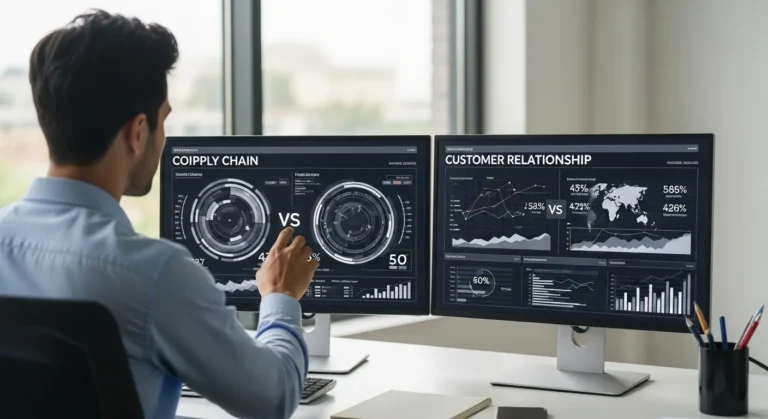
Managing a growing company on spreadsheets is like trying to build a skyscraper with a hammer and a few nails. Eventually, the structure becomes too heavy to support itself. For a small business owner, the breaking point usually arrives when data silos prevent him from seeing the full picture of his operations. He might have sales data in one place, inventory in another, and payroll in a third, with none of them talking to each other.
An ERP (Enterprise Resource Planning) system for small business acts as the central nervous system of the company. It integrates these disparate functions into a single platform. When a founder realizes his team is wasting hours on manual data entry, he starts looking for the strategic advantages of centralized data to regain control and focus on growth rather than administrative firefighting.
Key Features Every Small Business ERP Needs
Not all ERPs are created equal. A small business doesn’t need the bloated complexity of a system designed for a Fortune 500 corporation. Instead, he should look for a modular approach that allows him to pay only for what he uses. Essential modules typically include:
- Inventory Management: Real-time tracking of stock levels to prevent overstocking or stockouts.
- Financial Management: Automated invoicing, expense tracking, and tax preparation.
- Customer Relationship Management (CRM): A dedicated space to track lead interactions and sales pipelines.
- Human Resources: Simplified payroll and employee performance tracking.
It is vital for a manager to understand the nuances of distinguishing between simple bookkeeping and full-scale resource planning before signing a long-term contract. While basic accounting software handles the money, an ERP handles the entire workflow that generates that money.
Cloud vs. On-Premise: Which Fits Your Budget?
In 2026, the debate between cloud-based and on-premise ERPs has largely shifted in favor of the cloud. For a small business owner, the SaaS (Software as a Service) model is almost always the superior choice. He avoids the massive upfront costs of buying servers and hiring a dedicated IT team to maintain them. Instead, he pays a monthly subscription fee, ensuring his software is always updated with the latest security patches.
On-premise systems still exist for those who require absolute control over their data due to strict regulatory requirements. However, the agility offered by the cloud allows a business owner to access his dashboard from a smartphone while he is traveling or meeting with clients, providing a level of flexibility that traditional systems simply cannot match.
Implementation Pitfalls to Avoid
The failure of an ERP implementation is rarely the fault of the software itself; it is usually a failure of strategy. Many business owners make the mistake of trying to replicate their old, inefficient manual processes within the new digital system. He must be willing to adapt his workflows to the best practices baked into the ERP software.
Another common trap is over-customization. A manager might feel his business is unique and requires dozens of custom features. This leads to a bloated system that is difficult to upgrade and expensive to maintain. The goal should be to stay as close to the “out-of-the-box” functionality as possible to ensure long-term scalability and ease of use.
Top ERP Systems for Small Businesses in 2026
The market is currently dominated by a few key players who have tailored their offerings specifically for smaller operations. Odoo remains a favorite due to its open-source roots and modular nature, allowing a user to start with just one app and add more as he grows. NetSuite, while more expensive, offers a robust path for businesses that expect rapid, high-volume scaling.
For those already deep in the Microsoft ecosystem, Dynamics 365 Business Central provides seamless integration with Excel and Outlook, making the transition much smoother for employees who are already comfortable with those tools. The right choice depends entirely on the specific industry and the technical literacy of the team.
Frequently Asked Questions
How much does an ERP system for a small business cost?
Costs vary widely, but most cloud-based ERPs for small businesses range from $50 to $200 per user per month. Implementation fees can add a few thousand dollars to the initial setup, depending on the complexity of data migration.
How long does it take to implement an ERP?
For a small business, a standard implementation usually takes between three to six months. This includes data cleaning, system configuration, and training the staff to use the new interface effectively.
Can an ERP replace my current accounting software?
Yes, most modern ERP systems include a full accounting suite that can replace tools like QuickBooks or Xero. This eliminates the need for manual data transfers between your operations and your books.